

Quick answer: An intake meeting is the kickoff conversation between a recruiter and a hiring manager, held before any sourcing starts, where the two agree on why the role exists, what the person must be able to do, what it pays, how the interviews will run, and how fast feedback will come back. Plan for 30 to 45 minutes, run it from a template, and book a short calibration call after you send the first 3 to 5 profiles.
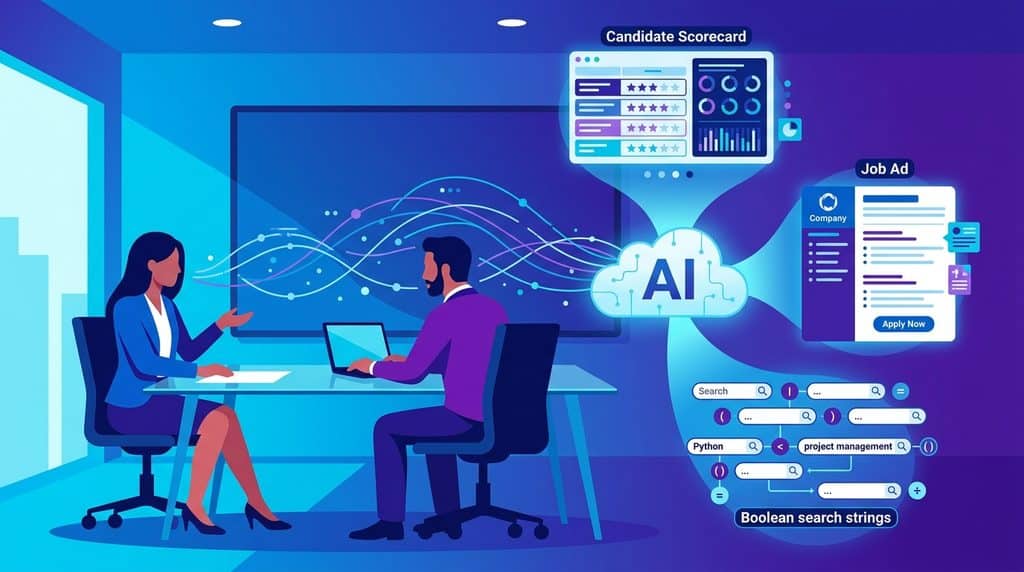
What changed in 2026: Many recruiters now record the intake (with consent) using an AI note taker, then paste the transcript into Claude, ChatGPT or Grok to produce the scorecard, job ad, Boolean string and first outreach message in one pass. The conversation still has to be good. AI only saves the write up time.
Who this is for: Corporate recruiters, agency recruiters taking a job order from a client, and hiring managers who want to know what a recruiter needs from them.
What is an intake meeting in recruiting?
An intake meeting is a structured conversation between the recruiter and the hiring manager that turns a vague request (“I need a senior engineer”) into a search plan both sides sign off on. The meaning is simple: it is the moment the recruiter takes in the order. Everything that follows, from the job ad to the search strings to the interview loop, comes out of what gets agreed in this meeting.
LinkedIn’s head of recruiting described a great intake as one of the most important and often missed opportunities to build credibility with the business. In 20 years of technical recruiting, most searches I saw go sideways traced back to a skipped or rushed intake.
Who attends, how long does it take, and when does it happen?
The recruiter and the hiring manager attend every time. Add the sourcer if one is assigned, and the HR business partner or compensation partner if pay is likely to be a problem. Book 30 minutes for a role you have filled before and 45 to 60 minutes for a new or senior role. Hold it within a day or two of the requisition being approved and before a single job ad goes live.
| Item | Corporate (in house) intake | Agency intake (job order) |
|---|---|---|
| Who is in the room | Recruiter, hiring manager, sometimes sourcer and HR partner | Account manager or recruiter, client hiring manager, sometimes client HR |
| Typical length | 30 to 60 minutes | 30 to 45 minutes, often shorter for repeat clients |
| Extra topics | Internal candidates, referrals, headcount approval | Fee, exclusivity or retainer, feedback SLA, guarantee period, who else is working the role |
| Main risk if skipped | Slow time to fill and rejected slates | Wasted submittals and an unpaid search |
Why do intake meetings matter so much for time to fill?
Alignment is the bottleneck, not sourcing. LinkedIn reports that hiring managers name alignment on expectations as the top hurdle to a strong recruiter partnership, and only about 31% of hiring managers completely agree they communicate enough with recruiters. The intake is where you fix both of those before they cost you weeks.
The clock matters too. SHRM’s 2026 benchmarking puts median time to fill for nonexecutive roles at 39 calendar days, and the same brief notes that more than 2 in 3 organizations reported struggles hiring for open positions. A recruiter who loses the first two weeks to a rejected slate has burned a third of a typical search before the real work starts.
A trainer quoted by SHRM named the biggest drags on speed as unrealistic expectations about profile and pay. Both are intake problems.
What questions should a recruiter ask the hiring manager in an intake meeting?
Group the questions by section so nothing gets skipped. These are the intake meeting questions I use, in order.
Why does this role exist?
- Is this a backfill or a new role? If backfill, why did the last person leave and what would you change?
- What business problem does this hire solve, and what happens if the seat stays empty for three months?
What are the must haves versus the nice to haves?
- Name the three or four things this person must already be able to do on day one.
- For each requirement: would you hire someone who had everything else but not this?
- Is the degree or years of experience truly required, or standing in for a testable skill?
That “would you hire someone with X but not Y” test comes straight from LinkedIn’s own intake guidance, and it is the fastest way to shrink a wish list. If the manager keeps listing credentials instead of abilities, point them at a skills based hiring approach.
What does success look like at 90 days and at one year?
- What will this person have shipped, fixed, or owned by day 90?
- What does a strong performance review look like at the one year mark?
What is the compensation and how flexible is it?
- What is the approved base range, bonus, and equity?
- Is there room to go above the range for the right person, and who approves that?
- What are the location, remote, hybrid, travel, and visa sponsorship rules?
What does the interview process and timeline look like?
- Who interviews, in what order, and what does each person assess?
- How fast will you review resumes? I ask for feedback within 48 hours.
- Any vacations or blackout dates, and what is the target start date?
SHRM’s guidance on intake calls stresses getting the manager to commit to a timeline for reviewing resumes and running interviews.
How would you sell this job to a stranger?
- Why would a happy, employed person leave their current job for this one?
Which companies should we target, and which are off limits?
- Which three to five companies have people who do this work well?
- Which companies are no go because of client agreements, partnerships, or non solicit terms?
What are the deal breakers?
- What would make you reject a candidate in the first five minutes?
What does a recruitment intake meeting template look like?
Here is a copy and paste intake template. Drop it into a doc or your ATS notes and fill it in live during the call. Send the blank version to the hiring manager the day before, which LinkedIn also recommends so the manager can prepare in advance.
| Section | What to capture | Answer |
|---|---|---|
| Role basics | Title, level, team, reports to, location, remote policy | |
| Why open | Backfill or new, business problem, cost of an empty seat | |
| Must haves (max 4) | Abilities needed on day one, each passing the “would you hire without it” test | |
| Nice to haves | Bonus skills that break a tie | |
| Success at 90 days | Concrete deliverables | |
| Success at 1 year | Outcomes and scope | |
| Compensation | Base range, bonus, equity, stretch approval, sponsorship | |
| Interview loop | Stages, interviewers, what each assesses | |
| Timeline | First slate date, feedback turnaround, target start, blackout dates | |
| Selling points | Top three reasons to join, honest challenges | |
| Target companies | Where to source | |
| No go companies | Do not approach list | |
| Deal breakers | Automatic rejections | |
| Calibration date | Call after first 3 to 5 profiles | |
| Agency only | Fee, exclusivity, guarantee, feedback SLA, other agencies on the role |
How is an agency intake different from an in house intake?
An agency intake is a job order intake with a client, so it has a commercial layer on top of the role questions. Before sourcing, confirm the fee, whether the search is contingent, exclusive, or retained, the guarantee period, and how many other agencies have the role.
The most important agency term is a feedback SLA. Agree in the intake that the client will respond to every submittal within an agreed number of business days. Without it, your candidates go stale in a client inbox. For agency owners setting up their process and tools, our agency tech stack guide covers where intake notes should live.
How does AI turn an intake call into a job ad and search strings in 2026?
Record the call, get a clean transcript, and let a large language model draft every downstream asset from that one source. You review and edit instead of starting from a blank page four times.
- Record with consent. Use an AI note taker inside Zoom, Teams, or Meet. Our AI note taker comparison covers which ones handle recruiting calls well.
- Paste the transcript into Claude, ChatGPT, or Grok with the prompt below.
- Review the scorecard first. If the must haves are wrong, everything else will be wrong too.
- Send the scorecard and job ad to the hiring manager for sign off within 24 hours.
- Test the Boolean string in LinkedIn or your sourcing tool and adjust using our free Boolean builder.
Do I need consent to record the intake meeting?
Yes, ask every time. Federal law sets a one party consent minimum, but about 11 states, including California, Florida, Illinois, Pennsylvania and Washington, generally require all party consent. Participants may sit in any state, so announce the recording and get a verbal yes on the recording itself. This is not legal advice; check your company policy.
What prompt turns an intake transcript into a scorecard, job ad, and Boolean string?
Copy this prompt, then paste your transcript underneath it.
You are an experienced recruiter. Below is the transcript of an intake meeting with a hiring manager. Using only facts stated in the transcript, produce: (1) a candidate scorecard with no more than 4 must haves, up to 4 nice to haves, and the 90 day and 1 year success measures; (2) a job ad of 350 to 450 words that opens with why the role matters, lists the must haves in plain language, and includes the pay range if one was stated; (3) one LinkedIn Boolean string and one Google X ray string using the target companies and must haves, excluding the no go companies; (4) a first outreach message under 90 words that leads with the strongest selling point. If any of these items is missing from the transcript, list it under "Open questions for the hiring manager" instead of guessing.
The last instruction stops the model inventing a salary or requirement nobody said. You will find variations of this and other templates in our recruiting prompt library, and a deeper walk through of the model itself in Claude for recruiters. If you only need the job ad step, see our AI job description generator guide.
| Output | What the AI drafts | What you must check |
|---|---|---|
| Scorecard | Must haves, nice to haves, success measures | That the must haves match what the manager actually prioritized |
| Job ad | Full posting from the conversation | Pay range, location rules, no inflated requirements |
| Boolean string | Titles, skills, company targets, exclusions | Syntax works in your tool, results count is realistic |
| Outreach message | Short first touch built on the selling points | Tone, accuracy, nothing confidential disclosed |
What should happen in the calibration meeting after the first slate?
Book a 15 minute calibration call as soon as the hiring manager has reviewed the first 3 to 5 profiles. Ask for a yes or no on each, plus the reason. The reasons are the real requirements. If the manager rejects someone who meets every must have, a hidden requirement exists; add it to the scorecard before sourcing more.
What are the most common intake meeting mistakes?
- Skipping it. A forwarded job description is not an intake.
- Letting the JD be the intake. Ask about outcomes and let the JD follow from them.
- Arriving without market data. SHRM’s sources advise recruiters to run a quick search during the meeting to test whether the profile is realistic.
- No calibration after the first slate. Without it you keep sourcing against a profile the manager already rejected.
- No written follow up. If the scorecard is not confirmed in writing, the requirements will drift.
What do recruiters on Reddit ask about intake meetings?
What do I do when the hiring manager won’t do an intake?
This comes up constantly on r/recruiting. Shrink the ask. Offer a 15 minute call, send the template ahead with your best guesses already filled in, and ask the manager only to correct it. If they still will not meet, send three sample profiles and ask which is closest. Put it in writing that sourcing starts once the scorecard is confirmed.
How do I push back on unicorn requirements?
Use data and trade offs rather than opinion. Show the live search count for the full wish list, then show it again with one requirement removed. Then frame the choice the way one trainer in SHRM’s coverage does: someone who is 80% of the profile hired in two weeks, or the perfect candidate still unfound in three months.
Quick answers
What is the meaning of an intake meeting?
It is the kickoff meeting between a recruiter and a hiring manager where they agree on the role, requirements, pay, interview process and timeline before any sourcing starts.
How long should a recruiter intake meeting with a hiring manager be?
Plan for 30 minutes on a familiar role and 45 to 60 minutes on a new or senior one, plus a 15 minute calibration call after the first slate.
What should an intake meeting checklist include?
Why the role is open, up to four must haves, nice to haves, 90 day and one year success, compensation, interview loop, timeline, selling points, target and no go companies, deal breakers, and a calibration date.
Can I use ChatGPT or Claude to write the job description from my intake notes?
Yes. Paste the transcript or notes with a prompt that tells the model to use only stated facts and to list gaps as open questions. Get the manager’s approval before posting.
Is it legal to record an intake meeting with an AI note taker?
Generally yes when everyone consents. Around 11 states require all party consent, so announce the recording at the start and get a clear yes from every participant.
What happens after the intake meeting?
Send the written scorecard for sign off within a day, post the job, start sourcing with the agreed Boolean string, and book the calibration call for when the first 3 to 5 profiles have been reviewed.
The bottom line
A 45 minute intake meeting decides whether the next six weeks go smoothly. Ask about outcomes rather than credentials, lock in pay and feedback timelines in writing, record the call with consent, and let AI turn the transcript into your scorecard, job ad, search string and outreach. Then calibrate after the first few profiles. If you are new to using AI for this kind of work, start with the free lessons in the AI Recruiting Academy.
Sources: LinkedIn Talent Blog, LinkedIn Talent Solutions, SHRM 2026 Benchmarking, SHRM Recruiting 101, SHRM on hiring managers, RCFP Recording Guide
Free newsletter
Get the Work Insiders weekly
One email a week: the recruiting and HR tech news that mattered, the tools we just added to the directory, and one practical guide. No spam, and you can unsubscribe in one click.