


Quick verdict: Data centres used about 485 terawatt hours of electricity worldwide in 2025, up 17% in a year, and the IEA expects that to roughly double to 950 TWh by 2030. In the US they used 176 TWh in 2023, or 4.4% of all electricity, and Lawrence Berkeley National Laboratory now puts their likely share at 11.8% by 2030.
The workforce angle: North American primary markets have a record 7,481 MW under construction and vacancy of just 1.4%, while nearly two thirds of operators say they struggle to hire or keep staff. Electricians, construction trades and senior facility managers are where the hiring pressure sits.
Updated October 9, 2026. Figures checked against the IEA, LBNL, DOE, CBRE, Uptime Institute, BLS and Census sources linked below.
How much electricity do data centres use worldwide?
About 485 TWh in 2025, according to the IEA’s IEA 2026 update. That was 17% more than the year before, while global electricity demand overall grew 3%. Electricity use at AI focused data centres grew even faster, by 50%.
The IEA’s base case has data centre consumption roughly doubling to 950 TWh by 2030, around 3% of global electricity. Its earlier Energy and AI report put 2024 use at 415 TWh, about 1.5% of global electricity, after five years of 12% annual growth.
| IEA scenario | Data centre electricity | Share of global electricity |
|---|---|---|
| 2024 estimate | 415 TWh | About 1.5% |
| 2025 estimate | 485 TWh | Not stated |
| 2030 base case | About 950 TWh | Around 3% |
| 2035 headwinds case | About 700 TWh | Under 2% |
| 2035 high efficiency case | About 970 TWh | 2.6% |
| 2035 lift off case | Over 1,700 TWh | About 4.4% |
Which countries drive the growth?
The United States and China account for nearly 80% of the growth to 2030. The IEA projects US consumption rising by about 240 TWh, or 130%, from 2024, and China’s by about 175 TWh, or 170%. Europe adds more than 45 TWh. Per person, the US already uses around 540 kWh of data centre electricity a year, an order of magnitude more than any other region.
How much US electricity do data centers use?
4.4% in 2023, or 176 TWh, according to the Lawrence Berkeley National Laboratory report released by the Department of Energy. That is three times the 58 TWh used in 2014. The 2024 report projected 325 to 580 TWh by 2028, or 6.7% to 12% of US electricity.
The forecast has since moved up. LBNL’s 2025 update, published in June 2026, estimates data centers could account for 11.8% of total US electricity by 2030, within a range of 9.5% to 15.3%.
How many data centers are there in the US?
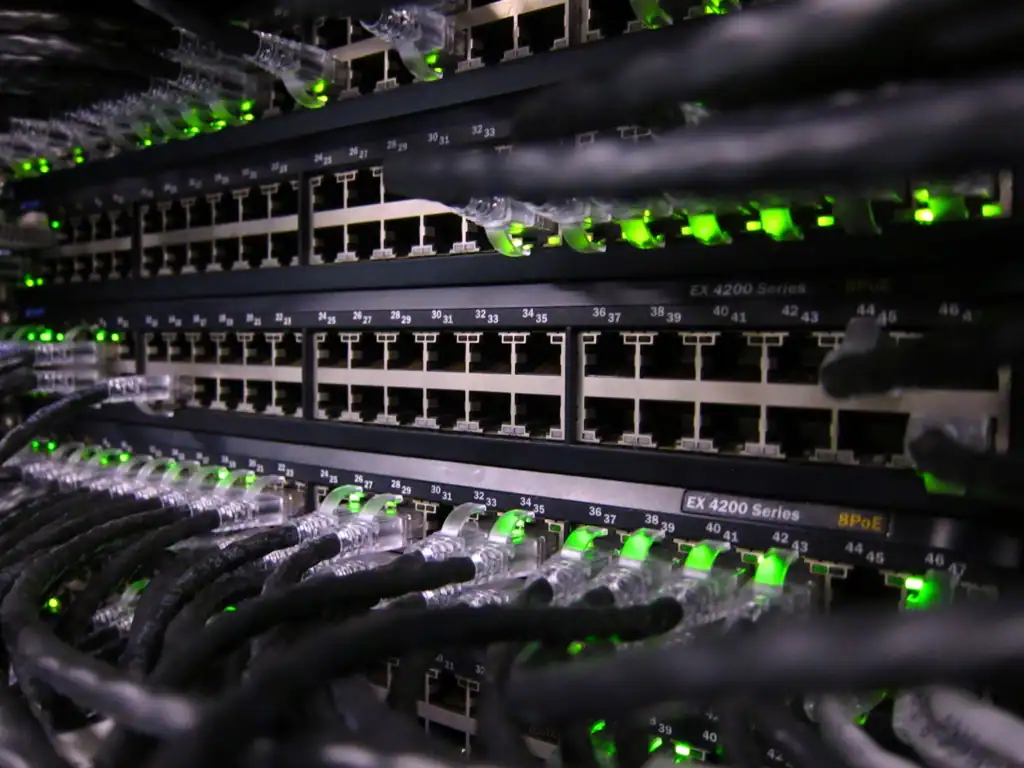
There were 5,426 data centers in the US as of March 2025, according to the EESI analysis, which cites about 1,000 in 2018 and 2,600 in 2021. EESI also estimates roughly one third of the world’s data centers are in the US, and that about 300 operate in Virginia alone.
Counts vary with definitions, so capacity is the better measure. A facility can be a single server room or a campus drawing hundreds of megawatts. That is why the industry now talks in megawatts rather than buildings.
How much data center capacity is being built?
A record amount. In the first half of 2026, capacity under construction across North America’s eight primary markets rose 24.8% to 7,481.1 MW, beating the previous peak of 6,350.1 MW in late 2024, according to the CBRE H1 2026 report. More than 80% of it is already preleased.
| CBRE primary market measure, H1 2026 | Figure | Change |
|---|---|---|
| Total supply | 10,903 MW | Up 33.7% year on year |
| Under construction | 7,481.1 MW | Up 24.8%, a record |
| Preleased share of construction | 80.4% | Up from 74.3% |
| Net absorption | 1,456.2 MW | Up 11.7% |
| Vacancy | 1.4% | Down from 1.6%, a record low |
| Rent rise, 3 to 10 MW deployments | 8.3% | Largest rise of any size band |
Less than 1,500 MW of future capacity remains available to lease, about six months of demand at the current pace. Atlanta overtook Northern Virginia as the busiest construction market for the first time, with 2,882 MW underway, while Northern Virginia remains the largest by inventory with vacancy of just 0.2%.
How much is being spent on data centers?
The five largest technology companies spent more than $400 billion of capital expenditure in 2025, and the IEA expects that to jump another 75% in 2026. Their combined spending is now larger than global investment in oil and gas production, according to the IEA.
On the construction side, Census data show US data center construction spending reached a seasonally adjusted annual rate of $59.3 billion in May 2026, up 23% in a year and about 8% of private nonresidential construction, according to the AGC analysis. Total US private construction ran at $1,655.3 billion in August 2026, per the latest Census construction release.
How is AI changing data centers?
It is pushing power per rack to the limit. The IEA says the power density of AI servers rose 11 times between 2020 and 2025 and is set to rise another fourfold by 2027, when one advanced rack could draw as much at peak as 65 households. CBRE notes that 100 kW GPU racks can only be cooled with closed loop liquid cooling.
Most existing sites are not there yet. Uptime Institute’s 2025 survey of more than 800 operators found rack densities rising slowly, mostly into the 10 kW to 30 kW range, with few facilities above 30 kW. About one third of operators run some AI training or inference today.
| AI signal | Figure | Source |
|---|---|---|
| Growth in AI focused data centre electricity, 2025 | 50% | IEA |
| AI focused data centre electricity, 2025 to 2030 | Triples | IEA |
| Capacity of AI factories in the past 18 months | More than tripled | IEA |
| AI server power density, 2020 to 2025 | Up 11 times | IEA |
| Operators running AI workloads | About one third | Uptime Institute |
| Small modular reactor offtake pipeline | 45 GW, up from 25 GW | IEA |
Is a single AI query a big energy user?
No. The IEA says energy per AI task has dropped by at least an order of magnitude a year, and a simple text query now typically uses less electricity than running a television for the same time. The growth comes from volume and from heavier uses such as video generation, reasoning and agents, which can use hundreds or thousands of times more energy per query.
How efficient are data centers?
Average efficiency has barely moved. The Uptime 2025 survey found average power usage effectiveness showed little change for the sixth year running, held back by legacy buildings and climate limits on cooling. The IEA puts cooling at about 7% of consumption in efficient hyperscale sites and over 30% in less efficient enterprise ones.
Emissions follow the power mix. EESI reports about 56% of electricity used by US data centers came from fossil fuels between September 2023 and August 2024, and estimates their 2023 use produced about 105 million metric tons of emissions. The IEA projects global data centre emissions reaching around 350 million tonnes by 2035, about 2% of power sector emissions.
How many people work in data centers?
About 500,000 people worked in US data centers in 2023, according to EESI. The closest official series, BLS data processing, hosting and related services (NAICS 518), employed 453,800 people in September 2026 on a preliminary basis, across 55,979 private establishments, per the BLS industry profile. That category also includes hosting and processing firms that are not data center operators.
Pay is high. Average hourly earnings in that industry were $60.78 in August 2026, preliminary, and $50.92 for production and nonsupervisory staff. Our tech job market report covers the wider hiring picture.
Is there a data center staffing shortage?
Yes. Nearly two thirds of operators in Uptime’s 2025 survey reported difficulty retaining staff, finding qualified candidates, or both. For the first time, more operators found it harder to recruit and keep senior people than early career staff, which Uptime calls a management shortage as experienced leaders retire.
Which jobs do data center builds create?
Mostly construction and electrical trades. AGC lists electricians, operating engineers, concrete specialists, ironworkers, plumbers, pipefitters, truck drivers, project managers and engineers. It cites an Ohio study estimating one data center project could support nearly 9,700 construction jobs, and a Virginia study finding data centers supported nearly 74,000 jobs a year including ripple effects.
| Role | US jobs, 2025 | Median pay, 2025 | Outlook, 2025 to 2035 |
|---|---|---|---|
| Electricians | 821,000 | $63,190 | Up 9%, much faster than average |
| Electrical power line installers | See BLS | $95,320 | See BLS profile |
| HVAC and refrigeration mechanics | See BLS | $61,010 | See BLS profile |
| Network and systems administrators | 323,600 | $99,130 | Down 4% |
| Computer network architects | See BLS | $134,050 | See BLS profile |
The contrast matters for recruiters. The physical trades that build and power data centers are growing fast, while BLS projects network and systems administrator jobs to shrink 4% over the same decade. AGC adds that construction hourly earnings rose 5.0% in the year to March 2026, against 3.4% across the private sector.
What is slowing data center growth?
Power, equipment and local approval. The IEA reports tightening supply chains for gas turbines, transformers and chips, with a 70% surge in gas turbine orders in 2025 and a high bandwidth memory shortage expected to last through at least 2027. CBRE says community opposition and zoning delays now rank alongside power and fibre in site selection.
Developers are responding with onsite power. The IEA estimates 15 to 27 GW of onsite natural gas could power data centres by 2030, mostly in the US, and 20 to 25 GW of battery storage could be installed in data centres globally. States are also adding large load tariffs; CBRE notes Virginia’s $0.011 per kWh consumption tax took effect on July 1.
How we built this page
Electricity figures come from the IEA’s April 2025 and April 2026 reports and from LBNL’s 2024 report and 2025 update. Market capacity comes from CBRE’s H1 2026 North American report, operator conditions from Uptime Institute’s 2025 survey, and jobs and pay from BLS. Facility counts and emissions come from EESI, which cites LBNL and EPRI. We removed market size forecasts from commercial research firms that we could not check against a primary source. For hiring ideas in this sector, our skills based hiring playbook applies directly to trades roles.
Quick answers
How much electricity do data centers use?
About 485 TWh worldwide in 2025, per the IEA, and 176 TWh in the US in 2023, or 4.4% of US electricity, per LBNL.
Will data center power use double?
The IEA’s base case has global use roughly doubling to 950 TWh by 2030. LBNL’s 2025 update puts US data centers at 11.8% of US electricity by 2030.
How many data centers are in the US?
5,426 as of March 2025, according to EESI, up from about 1,000 in 2018.
Where is the most data center capacity in North America?
Northern Virginia, with 4,496.5 MW of inventory in H1 2026. Atlanta has the most under construction, at 2,882 MW.
What is the data center vacancy rate?
1.4% across North America’s primary markets in H1 2026, a record low, and 0.2% in Northern Virginia.
How many people work in data centers?
About 500,000 in 2023 by EESI’s estimate. BLS counts 453,800 jobs in data processing and hosting as of September 2026.
Is it hard to hire data center staff?
Nearly two thirds of operators report difficulty retaining staff, finding qualified candidates, or both, and senior roles are now the hardest to fill.
What jobs do data centers need most?
Electricians and construction trades during the build, then facility, electrical, cooling and network staff to run them. BLS projects electrician jobs to grow 9% from 2025 to 2035.
The bottom line
Data centres are still a small slice of global electricity, about 1.5% in 2024 and about 3% by 2030 on the IEA base case, but a fast growing and highly concentrated one. In the US the share is far larger and heading toward about 12% of all power by 2030 on LBNL’s central estimate.
The limit is no longer demand. It is power, equipment, permits and people. With vacancy at 1.4% and record construction, the employers that can staff electricians, trades and experienced facility leaders will set the pace. Recruiters working these roles should look at our AI engineer salary data for the software side of the same boom.
Sources: IEA 2026 update, IEA press release, IEA Energy and AI, DOE on LBNL, LBNL 2025 update, CBRE H1 2026, Uptime 2025 survey, EESI analysis, BLS industry profile, BLS electricians, BLS network administrators, AGC analysis, Census construction release
Free newsletter
Get the Work Insiders weekly
One email a week: the recruiting and HR tech news that mattered, the tools we just added to the directory, and one practical guide. No spam, and you can unsubscribe in one click.