

In the rapidly evolving landscape of healthcare, medical device robotics stands at the forefront of innovation, blending cutting-edge technology with life-saving applications.
As of 2025, these robotic systems are not just tools but integral partners in diagnosis, surgery, rehabilitation, and patient care. From precise surgical arms to AI-driven assistants, medical robotics enhances accuracy, reduces recovery times, and expands access to advanced treatments.
The global medical robotics market is projected to reach $57 billion by 2032, driven by advancements in AI, miniaturization, and telesurgery. This article delves into the history, types, current advances, benefits, challenges, and future trends of medical device robotics, providing a comprehensive overview for healthcare professionals, tech enthusiasts, and patients alike.
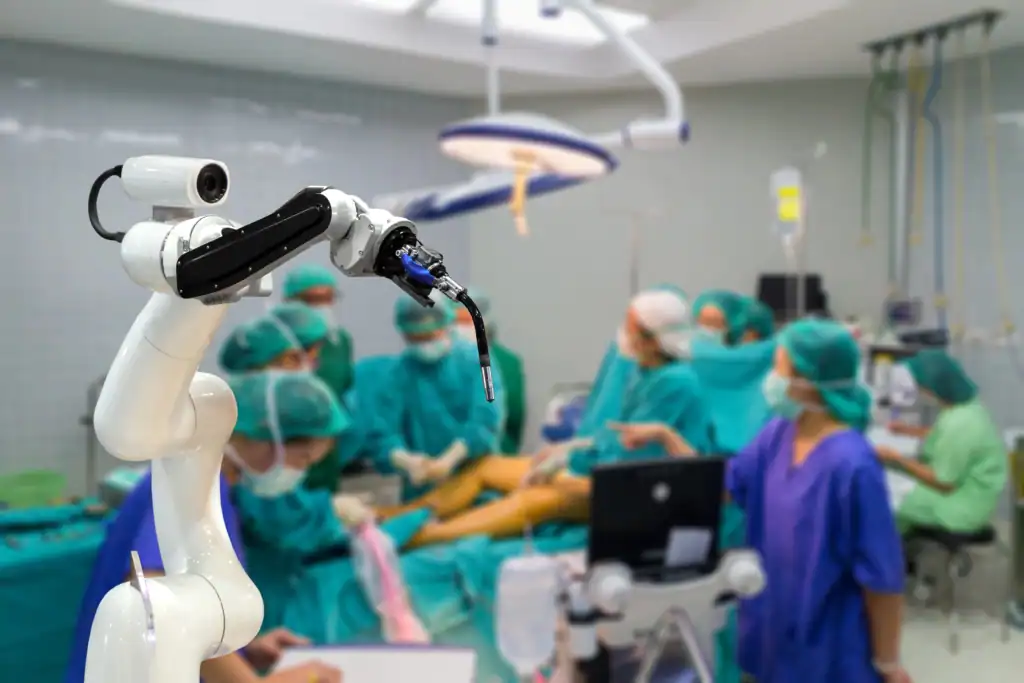
The History of Medical Device Robotics
The journey of medical robotics began in the realm of science fiction but quickly transitioned into practical applications. The concept of robots assisting in medicine can be traced back to literature, but the first real milestone occurred in the 1980s. In 1985, the PUMA 560 industrial robot was adapted for a neurosurgical biopsy, marking the inaugural use of robotics in surgery. This modification demonstrated how robotic precision could minimize human error in delicate procedures.
By the 1990s, systems like the AESOP (Automated Endoscopic System for Optimal Positioning) emerged, allowing voice-controlled camera manipulation during laparoscopic surgeries. The turn of the millennium brought the da Vinci Surgical System in 2000, which revolutionized minimally invasive surgery with its 3D visualization and dexterous instruments. Developed by Intuitive Surgical, it became a benchmark for robotic-assisted procedures.
Throughout the 2010s, robotics expanded beyond surgery into rehabilitation and diagnostics. Devices like the CyberKnife for radiotherapy and exoskeletons for mobility assistance gained traction. A historical review highlights how these platforms evolved from rigid industrial arms to sophisticated, AI-integrated systems, with milestones including the first transcontinental robotic surgery in 2001. By 2025, the field has matured, incorporating machine learning and nanotechnology, building on decades of iterative improvements.
Types of Medical Robots
Medical device robotics encompasses a diverse array of systems, each tailored to specific healthcare needs. Broadly categorized, they include surgical robots, rehabilitation robots, service robots, and more specialized variants.
Surgical Robots
These are perhaps the most well-known, designed for precision in operations. The da Vinci system, with its multi-arm setup, allows surgeons to perform complex procedures through tiny incisions. Other examples include the CyberKnife for non-invasive tumor treatment via targeted radiation.
Rehabilitation Robots
Focused on recovery, these devices aid patients with mobility issues. Exoskeletons like the ReWalk or Ekso GT provide powered assistance for walking, benefiting those with spinal cord injuries or stroke survivors. They use sensors to detect user intent and augment movement.
Service and Companion Robots
Robots like Moxi from Diligent Robotics handle logistical tasks such as delivering supplies in hospitals, freeing nurses for patient care. Companion robots, such as PARO the therapeutic seal, offer emotional support, particularly in elderly care.
Other Types
Laboratory robots automate testing and sample handling, while disinfection robots like Xenex use UV light to sanitize environments. Biorobots and nanorobots represent emerging categories, with microscopic devices targeting cellular-level interventions. This variety ensures robotics addresses multiple facets of healthcare delivery.
Advances in Medical Robotics for 2025
2025 has seen remarkable strides in medical robotics, fueled by AI integration and miniaturization. The rise of AI-assisted surgery is prominent, with systems synthesizing data from peer reviewed studies to enhance real-time decision-making. Miniaturized robotic systems allow for less invasive procedures, such as micro-robots navigating blood vessels for targeted drug delivery.
Telesurgery has advanced, enabling remote operations with low-latency 5G networks. The International Symposium on Medical Robotics highlights innovations like improved haptic feedback in surgical arms. Robotic platforms are expanding applications, reducing surgical variability and ever-expanding to new specialties like thoracic and gynecologic surgeries.
Companies like Intuitive Surgical continue to lead with updated da Vinci models featuring enhanced AI for tremor filtration and ergonomics. Other notables include Medtronic’s Hugo and CMR Surgical’s Versius, both gaining FDA approvals for broader use. These advances are transforming healthcare by making procedures safer and more efficient.
Benefits of Robotic Medical Devices
The advantages of medical device robotics are multifaceted, impacting patients, surgeons, and healthcare systems. Precision is paramount; robots eliminate hand tremors, enabling sub-millimeter accuracy in surgeries, which leads to fewer complications and success rates of 94-100%. Minimally invasive approaches result in smaller incisions, reduced blood loss, and shorter hospital stays.
Consistency ensures high-quality outcomes regardless of surgeon fatigue. Cost-efficiency emerges over time through lower readmission rates and optimized resource use. In rehabilitation, exoskeletons accelerate recovery, improving quality of life. Overall, these devices enhance diagnostic accuracy, treatment planning, and patient safety.
Challenges and Limitations
Despite the benefits, challenges persist. High initial costs for systems like da Vinci can exceed millions, limiting adoption in resource poor settings. Integration into existing workflows requires extensive training, and technical failures, though rare, pose risks.
Ethical concerns include data privacy in AI-driven systems and the potential for over reliance on technology. Research gaps exist in long-term outcomes and equitable access. Additionally, regulatory hurdles and the need for seamless human-robot interaction remain barriers.
Future Trends in Medical Device Robotics
Looking ahead, 2025 trends point to deeper AI integration, with robots performing autonomous tasks like plaque removal or lab testing. Micro and nano robots will target cellular diseases, while advanced surgical robotics emphasize precision medicine. Telesurgery and 3D printing for custom devices are on the rise, alongside shifts in care sites.
The market anticipates growth in renal denervation and AI-powered diagnostics. Innovations like Medtronic’s Hugo aim to democratize access. By 2026, the robotic-assisted surgery sector could hit $14 billion, driven by these trends.
Conclusion
Medical device robotics is reshaping healthcare, offering unprecedented precision and efficiency. From its origins in the 1980s to 2025’s AI-enhanced systems, the field continues to innovate.
While challenges like cost and integration remain, the benefits far outweigh them, promising a future where robotics makes advanced care accessible to all. As technology advances, staying informed on these developments is crucial for leveraging their full potential.
Free newsletter
Get the Work Insiders weekly
One email a week: the recruiting and HR tech news that mattered, the tools we just added to the directory, and one practical guide. No spam, and you can unsubscribe in one click.