Physical Address
304 North Cardinal St.
Dorchester Center, MA 02124
Physical Address
304 North Cardinal St.
Dorchester Center, MA 02124

In the evolving landscape of industrial automation, dark factories also known as lights-out manufacturing represent the pinnacle of efficiency.
These fully automated facilities operate 24/7 with minimal or no human presence, eliminating the need for lighting, heating, or other human-centric infrastructure. Robots, AI, sensors, and interconnected systems handle every task from assembly to quality control.
At the core of these operations lies the Programmable Logic Controller (PLC), the “brain” that orchestrates machine coordination, real-time decision-making, and fault-tolerant control. PLC programming ensures seamless, reliable automation in environments where human intervention is rare or impossible.
This article explores how PLC programming enables dark factories, the key techniques involved, best practices, real-world examples, and the future of this technology.
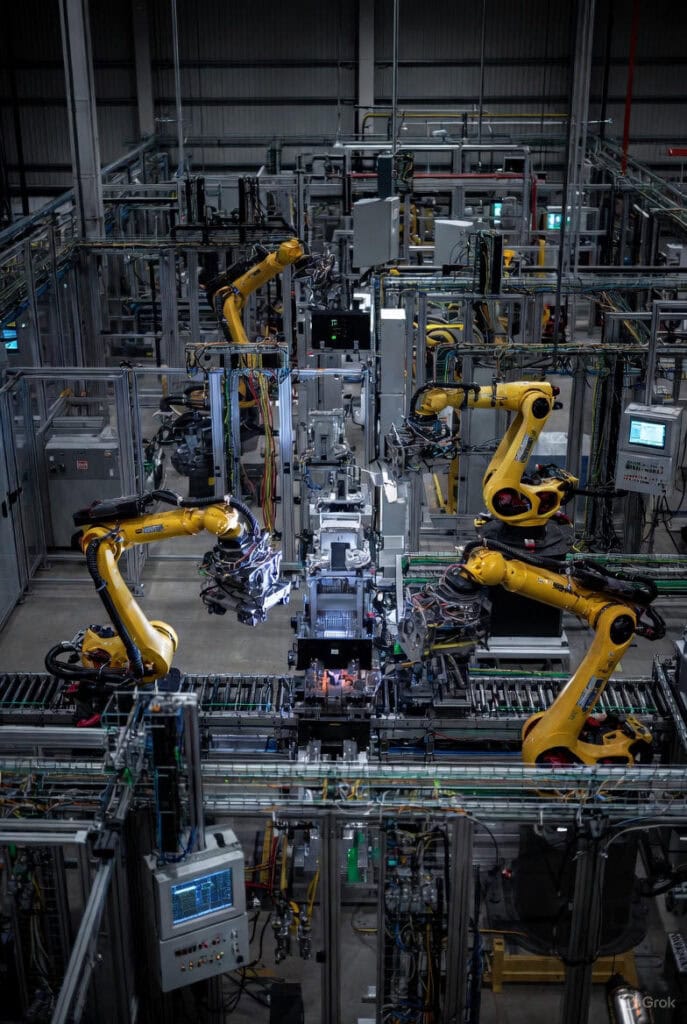
Dark factories are production facilities that run autonomously, often in near-darkness, relying on robotics, machine vision, AI, and IoT for all processes.
The term “dark” highlights the absence of lights, as machines don’t need illumination like humans do. These factories achieve unmatched productivity by operating continuously without breaks, shifts, or holidays.
Key benefits include:
While fully dark factories remain rare, many operations use hybrid or partial lights-out approaches, especially in electronics, automotive, and precision manufacturing.
PLCs are rugged industrial computers that control machinery by processing inputs from sensors and issuing commands to actuators. In dark factories, PLCs must be exceptionally reliable, as downtime can halt production without immediate human fixes.
In lights-out environments, PLCs:
Without PLCs, the complex orchestration required for autonomous operation would be impossible.
The IEC 61131-3 standard defines five programming languages for PLCs, providing flexibility for dark factory applications:
| Language | Type | Best For in Dark Factories | Pros | Cons |
|---|---|---|---|---|
| Ladder Diagram (LD) | Graphical | Discrete control, safety interlocks | Intuitive for electricians | Less suited for complex algorithms |
| Function Block Diagram (FBD) | Graphical | Modular process control, sensor integration | Reusable blocks | Can become cluttered |
| Structured Text (ST) | Textual | Complex logic, data handling, AI integration | High-level, powerful | Steeper learning curve |
| Instruction List (IL) | Textual | Low-level optimization | Efficient execution | Obsolete in modern systems |
| Sequential Function Chart (SFC) | Graphical | State-based sequences, batch processes | Clear workflow visualization | Overkill for simple tasks |
In dark factories, ST and FBD excel for integrating AI/ML, while LD and SFC handle reliable sequencing.
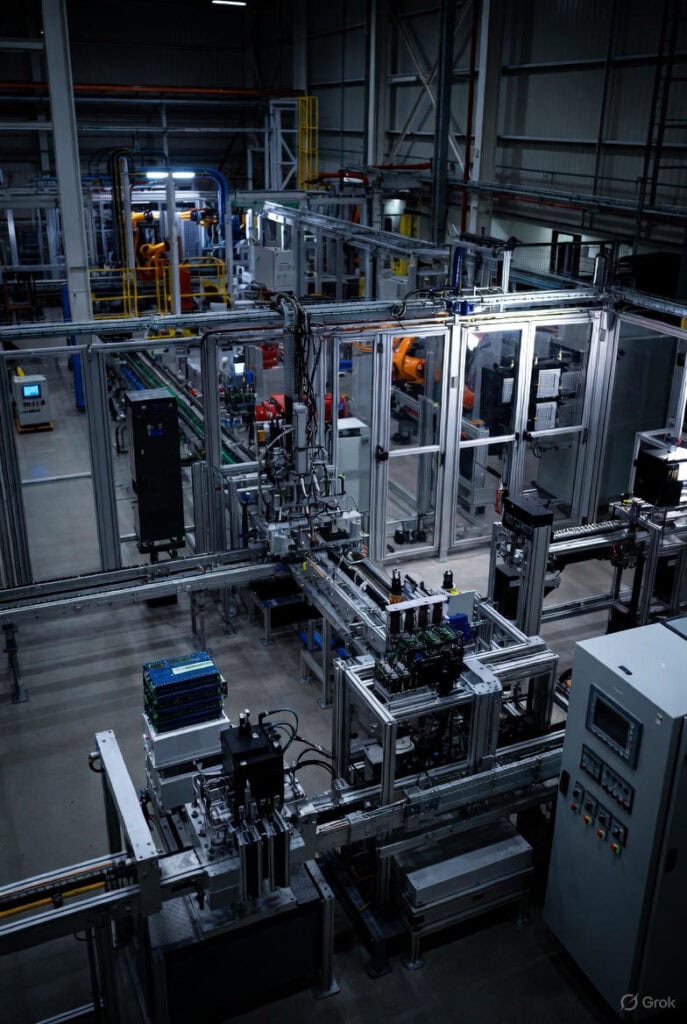
Programming for lights-out requires code that is robust, maintainable, and fault-tolerant:
Following these practices ensures uptime in environments where quick fixes aren’t feasible.
Several companies demonstrate PLCs in lights-out operations:
These examples show PLC programming enabling scalable, reliable automation.
As Industry 4.0 advances, PLCs will evolve:
By 2030, dark factories could become mainstream in high-precision sectors, with PLCs at the forefront.
PLC programming is the invisible force driving dark factories toward unprecedented efficiency and autonomy. By leveraging IEC 61131-3 languages, modular design, and robust diagnostics, engineers create systems that operate flawlessly in the dark.
As automation accelerates, mastering these techniques will be essential for the future of manufacturing.
Sources: