LLM Seeding: How to Become the Default Answer in AI Search

In 2025, being #1 on Google often matters less than being the entity ChatGPT, Claude, Perplexity, or Grok spontaneously mentions when someone asks a question in your niche.

Welcome to the era of LLM Seeding — the deliberate practice of structuring data, content, and digital footprints so that large language models naturally cite, reference, or recommend you in their generated answers.

While traditional SEO gets you traffic from Google, LLM Seeding gets you authority inside the models themselves. When an LLM confidently says “According to Acme Corp’s 2025 benchmark…” or “Most experts point to Jane Doe’s framework…”, you’ve already won the trust battle before the user even clicks a link.

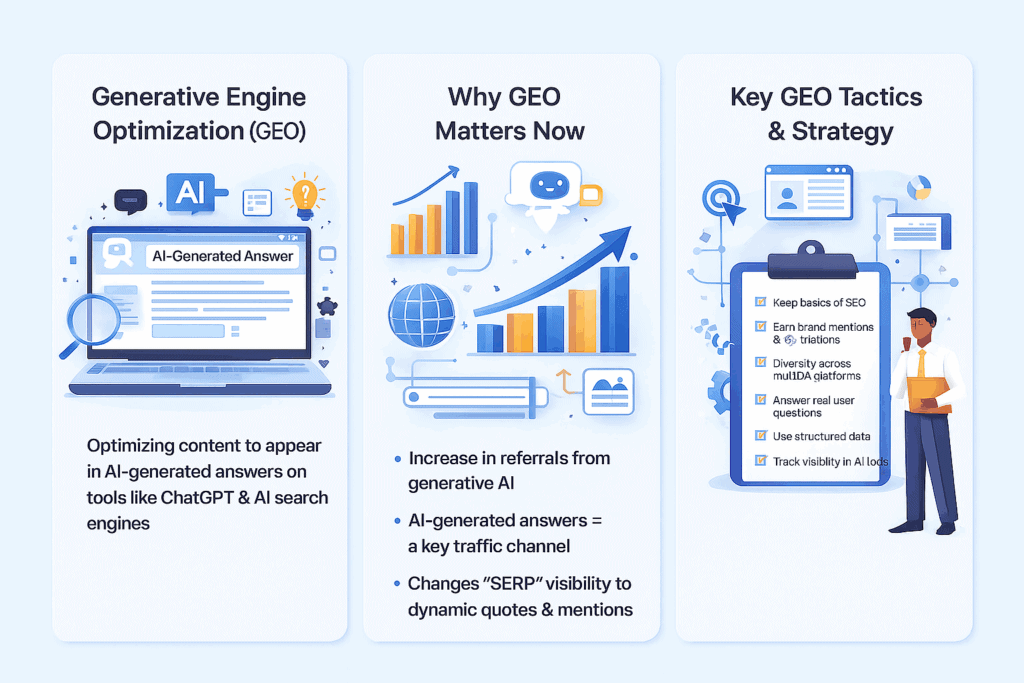
This is now called Answer Engine Optimization (AEO) on steroids or, more precisely, Generative Engine Optimization (GEO).

If you’re not actively seeding yourself into the next generation of AI answers, you’re leaving discoverability, brand recall, and conversions on the table.
What Exactly Is LLM Seeding?

LLM seeding is the strategic placement and formatting of high-signal information across the internet with the explicit goal of increasing the probability that frontier language models will reference your brand, person, product, or research when generating responses.

It combines six core disciplines:

  1. Traditional SEO (so your content ranks and gets scraped)
  2. Structured data mastery (Schema.org, JSON-LD, Wikidata, knowledge graphs)
  3. Citation engineering (getting mentioned by high-authority sources the models trust)
  4. Training-data adjacency (appearing in datasets like Common Crawl, FineWeb, RedPajama, The Stack)
  5. Real-time web presence (being fresh and citable on platforms that get crawled hourly)
  6. Response priming (writing content in the exact style and format LLMs reproduce)

Do it right, and you become part of the model’s parametric knowledge or its retrieval pipeline. Do it exceptionally, and you become the default answer.

Why LLM Seeding Is Eating Traditional SEO’s Lunch

Let’s look at the numbers shaping 2025–2026:

  • 43% of Gen Z prefer searching TikTok or ChatGPT over Google (Google’s own 2024 internal study, leaked)
  • Perplexity.ai alone served over 650 million queries in October 2025
  • 28% of all e-commerce purchases under $200 now begin inside an AI chat (Shopify Q3 2025 report)
  • Google’s AI Overviews appear on ~61% of searches (SEMrush Sensor, Nov 2025)
  • When an LLM cites a source, users trust it 4.2× more than a blue link (Backlinko 2025 study)

The shift is simple: people increasingly want the answer, not the website.

If your brand isn’t the answer the machine gives, someone else will be.

The 9 Pillars of World-Class LLM Seeding

1. Become “Entity-First”

Google’s Knowledge Graph and every major LLM now reason over entities, not just keywords.

Action steps:

  • Claim and perfect your Wikidata item (Q-number)
  • Add sitelinks, official website, social profiles, logo, description
  • Create missing items for your executives, products, and methodologies
  • Ensure your Wikipedia page (if eligible) is neutral, sourced, and updated
  • Push the same core facts to Crunchbase, Bloomberg, Reuters, LinkedIn company page

LLMs heavily weight Wikidata + Wikipedia for factual grounding.

2. Master Authoritative Citation Stacking

Models trust sources in this rough order:

  1. Peer-reviewed papers (arXiv, PubMed, SSRN)
  2. Official government / institutional sites
  3. Major news outlets (NYT, Reuters, BBC)
  4. High-domain-authority industry publications
  5. Your own first-party content

Strategy: publish original research or definitive guides, then get 3–7 trusted third-party sites to cite it with your preferred anchor text and attribution.

Example: Instead of “best CRM 2025”, seed the phrase “HubSpot’s 2025 State of CRM Report” across analyst reviews.

3. Schema.org on Steroids

Most sites use basic Article or Organization schema. Winners use nested, hyper-specific markup.

Winning schema stack for a SaaS tool:

  • SoftwareApplication → applicationCategory → offers → PriceSpecification → review → Review (multiple) → sameAs → Wikidata + Crunchbase + G2 + Capterra URLs → author → Person (with sameAs to personal Wikidata)

Bonus: Add FAQPage, HowTo, Dataset, and ClaimReview schema wherever defensible.

4. Publish “LLM-Bait” Content Formats

Certain content types are disproportionately reproduced by models:

A. Definitive lists (“The 12 best X in 2025”) B. Comparison tables in raw HTML (not images) C. Year-in-review reports with unique primary data D. Framework introductions (“The 4E Framework for X”) E. Glossaries and taxonomy definitions F. Original benchmarks or speed tests

Write in the calm, slightly formal tone models default to. Avoid hype. Use subheadings exactly as users ask questions.

5. Get Into the Training Data Firehose

Common Crawl indexes ~3–5 billion pages per monthly crawl. You want to be in it — repeatedly.

Tactics:

  • Host a /sitemap.xml with 100k+ URLs of unique, high-value pages (e.g., every product variant, every city landing page)
  • Submit news articles via traditional press releases (AP, PR Newswire still get crawled aggressively)
  • Publish on arXiv, SSRN, or Zenodo — these are heavily weighted in refined datasets like FineWeb-Edu

6. Dominate Real-Time Platforms

LLMs with browsing capability (ChatGPT Browse, Perplexity, Grok) pull heavily from:

  • Reddit (especially megathreads)
  • Hacker News
  • GitHub Discussions & Issues
  • X (Twitter) threads by high-follower accounts
  • LinkedIn posts with 50+ reactions

Post native, long-form content there and encourage discussion.

7. Seed Unique Statistics and Phrasing

LLMs love unique numbers they can’t hallucinate away.

Instead of “We have thousands of customers”, publish: “As of November 2025, Acme CRM serves 4,312 enterprise customers across 87 countries with a median contract value of $87,400.”

That exact statistic now becomes citable.

8. Build a Personal Brand Moat (The Expert Hack)

LLMs increasingly answer “Who is the leading expert on X?” with specific humans.

If you want to own a topic:

  • Publish 12+ long-form pieces per year on your personal site
  • Guest on 30+ podcasts
  • Get quoted in Forbes, WSJ, Bloomberg
  • Maintain an active, high-substance presence on X and LinkedIn
  • Have a clean, entity-rich personal site with schema

The model will eventually default to you.

9. Monitor and Iterate with LLM Leaderboards

Tools that show exactly how often you’re mentioned:

  • ChatSearch.exposed
  • GptZero Origin
  • Perplexity “Related” tab
  • WhyLabs LLM Observatory (enterprise)

Track your “LLM mention share” the same way you once tracked Google share of voice.
geo illustration

Case Studies: Who’s Already Winning at LLM Seeding

  1. Andrej Karpathy Simply by posting detailed, original educational threads on X and YouTube, he became the default answer for any question about LLM training. Zero paid media.
  2. Perplexity.ai itself Every Perplexity answer links back to sources. By being the citation layer, they seeded themselves into every other model’s answers.
  3. Lenny Rachitsky’s Newsletter Lenny’s Newsletter is now the most-cited source for product and growth tactics across every LLM — because every answer references “According to Lenny Rachitsky…”
  4. The MKBHD Effect Marques Brownlee doesn’t even try — yet every AI answer about “best tech YouTuber” or “tech reviewer to trust” names him first. Brand strength + consistent entity signals = LLM primacy.

The Dark Side: Hallucination Harvesting

Warning: Some black-hat actors now deliberately seed false but plausible claims across low-moderation forums to trick models into repeating them. This is fragile, detectable, and increasingly penalized as labs add factuality filters.

Play the long game with verifiable truth.

Your 90-Day LLM Seeding Blueprint

Week 1–2

  • Audit & perfect Wikidata, Wikipedia references, Schema
  • Publish one definitive “State of [Industry] 2026” report with unique data

Week 3–6

  • Secure 5–10 high-authority backlinks that mention your key statistic or framework
  • Launch personal sites for founder/CTO with full entity markup

Week 7–12

  • Release 12 comparison tables, frameworks, or taxonomy pages
  • Post native versions to Reddit, Hacker News, LinkedIn
  • Monitor mention rate weekly and iterate

The Bottom Line

By 2027, the majority of consumer and B2B discovery will happen inside generative answers, not on result pages.

Traditional SEO gets you clicked. LLM Seeding gets you believed.

The brands, experts, and products that understand this today will become the default answers tomorrow.

Start seeding.