

At WorkInsiders.com our team reviews real workplace dynamics and employee experiences across industries to deliver practical guidance. Research shows micromanagement remains one of the most common sources of stress and disengagement reported in professional settings.
You can protect your performance mental health and future options even when oversight feels excessive. This guide combines data from major studies with tactics that reduce friction while you deliver results.
Key insights appear first. Companies lose hundreds of billions yearly from reduced output and people leaving according to productivity analyses. Employees facing heavy control show much higher quit rates and lower morale.
Proactive updates often cut unnecessary interruptions faster than direct complaints. Consistent delivery plus clear boundaries builds leverage over months. Knowing when to document escalate or exit keeps your career on track.
What exactly counts as micromanagement versus helpful oversight?
Micromanagement crosses into excess when a manager controls every step insists on approvals for minor choices and rarely delegates. Normal oversight checks key outcomes and milestones without rewriting your work or demanding constant status.
The difference shows up in patterns like unscheduled pings for tiny details or irritation when you make small decisions independently.
Many professionals spot it through repeated revisions that add little value or requests for minute by minute reports on routine tasks. Clear distinction helps you respond to the behavior rather than the person.
Why do experienced managers still fall into micromanaging patterns?
Fear of mistakes or loss of control often drives the habit even among capable leaders. Past experiences with underperforming teams or pressure from higher ups can trigger tighter grips on projects. New managers sometimes carry over individual contributor habits where doing the work themselves felt safer.
Organizational demands for speed or perfection amplify this tendency in high stakes environments. Understanding these roots lets you address the impact strategically instead of reacting emotionally. Studies confirm the style usually reflects the manager trying to manage their own uncertainty more than any shortcoming on your part.
How much does micromanagement actually cost companies and careers?
The financial hit reaches hundreds of billions annually in lost productivity and turnover based on recent productivity reviews. Gallup research found micromanaged employees were more than three times as likely to quit within six months.
A Trinity Solutions survey showed 85 percent reported damaged morale while 71 percent said it interfered with job performance. Another set of findings indicated 69 percent of affected employees considered changing jobs because of it.
Stressed teams under constant watch produce more errors and far less innovation over time. Top performers tend to leave first which creates expensive replacement cycles for organizations.
Gallup’s own workplace research adds a twist most people do not expect: the bigger problem across the workforce is not too much feedback, it is too little. Gallup found that 47 percent of employees get feedback from their manager only a few times a year or less. Micromanagers are loud and memorable, but chronic under management is actually the more widespread issue in most companies.
More recently, an HR Dive report on a Monster.com survey found that nearly three out of four workers view micromanagement as the single biggest red flag in a workplace, and 46 percent say they would leave a job over it. This tells you something important: your reaction is a normal, shared response, not an overreaction.
How can you cut down on constant check ins through simple habits?
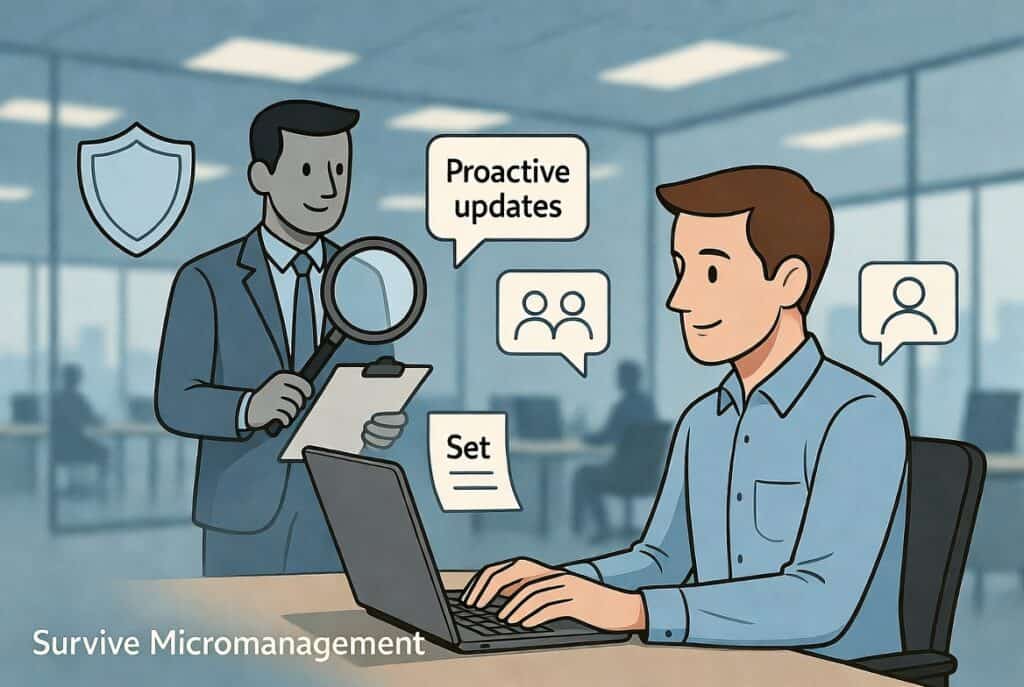
Send short structured updates before your manager asks for them. Use a basic format that covers completed items current status and any needed decisions. This approach satisfies their need for visibility while demonstrating you stay ahead of issues. Clarify success criteria and timelines at the start of each project then confirm them in writing.
Offer clear options when input is required so they stay involved without taking over. Reliable follow through on these steps gradually reduces ad hoc interruptions as trust builds. Many people notice fewer pings once the manager sees consistent progress without prompting.
What small shifts signal your manager may be easing up?
Watch for reduced rewriting of your drafts or fewer requests for every minor detail. They may start accepting your proposed approaches or timelines with less back and forth. Fewer after hours messages or a move toward weekly rather than daily updates also point to progress.
These changes develop slowly after you prove reliability through proactive communication and strong delivery. Keep private notes on the improvements so you can reference positive trends if conversations arise later. The pattern usually strengthens when your work consistently meets or exceeds expectations without extra oversight.
How do you set workable boundaries without creating conflict?
Frame requests around shared results rather than personal complaints. Suggest a predictable rhythm such as one weekly written summary plus a short scheduled meeting to replace random interruptions.
Respond to non urgent notes during normal work hours even if they arrive late. Use collaborative language focused on efficiency like I want to focus time on high impact work and believe regular updates will keep everyone aligned.
For decisions present options with your recommendation to give them input without full takeover. Consistent application of these limits protects your focus while keeping the relationship professional.
When and how should you raise the issue in a direct conversation?
Wait until you have built some credibility through strong consistent results. Schedule a private discussion and lead with specific business impacts instead of general frustration. Give examples such as frequent detailed revisions extended the last project timeline by several days.
Tie your suggestions to better outcomes like more autonomy on routine tasks would free capacity for higher priority work. Come ready with proposed solutions such as a revised update schedule or clear ownership areas.
Keep the tone solution focused and connected to team goals. Many managers respond better when they see the talk as helpful input rather than criticism.
Can micromanagement ever provide real benefits in certain cases?
Short term structure can support brand new team members or work with very high error costs where close guidance prevents bigger issues. Clear direction during onboarding or urgent periods sometimes stabilizes results temporarily.
However repeated studies show habitual use harms motivation creativity and long term retention in most roles and experience levels. The limited upside disappears quickly when it becomes the everyday style.
Effective leaders adjust oversight to the person task and risk level instead of applying uniform tight control. In creative or independent roles excessive involvement usually slows progress and increases frustration.
How does prolonged micromanagement affect your mental health and motivation?
Ongoing scrutiny often raises stress anxiety and feelings of being undervalued over time. Energy shifts toward managing the manager instead of focusing on meaningful contributions which reduces confidence and deep work capacity. Burnout risk grows when you cannot own outcomes or see clear progress from your efforts.
Many professionals report lower engagement and difficulty maintaining perspective after months in this environment. Simple protections like dedicated focus blocks and private records of accomplishments help preserve wellbeing. The situation tests resilience but also builds skills in stakeholder management that transfer to future roles.
What kind of documentation supports you if things do not improve?
Keep private dated notes on specific incidents and their effects on timelines or quality. Record examples where extra oversight created delays or rework without adding value. Save emails showing positive feedback or completed deliverables that met standards.
This record stays factual and ready for calm discussions or formal steps if needed. Focus entries on observable business impacts rather than feelings alone. Strong documentation strengthens your position during any escalation while protecting your professional standing.
When does it make sense to involve others or plan an exit?
Bring in HR or a skip level manager when the pattern creates a hostile setting harms your health or violates clear company guidelines. Present concrete examples and impacts rather than broad complaints. Request support in clarifying expectations or adjusting the working dynamic.
If efforts and conversations produce no change evaluate whether the role still serves your goals. Good organizations often address repeated issues because turnover carries high costs.
At the same time start discreet planning for other opportunities while maintaining strong performance. Many people use the period to gather evidence of their contributions and strengthen their position for a strategic move.
How do you keep delivering strong work and staying motivated anyway?
Concentrate on elements you control such as output quality and personal metrics. Track your own wins privately so external pressure does not derail results. Build connections with peers and other leaders who offer perspective and potential future support.
Treat the experience as practice in clear communication and resilience that strengthens your overall skill set. Protect recovery time outside work and pursue growth activities that restore energy.
Remind yourself the behavior usually reflects their approach more than your capability. Professionals who maintain professionalism during these stretches often advance by positioning themselves for healthier environments later.
Frequently Asked Questions
Can I actually change how my manager operates? Targeted influence through reliable results and structured updates often reduces interference even if full change does not occur.
Does this style ever count as illegal behavior? It crosses into legal territory only when it involves harassment discrimination or creates unsafe conditions. Most situations stay within management style issues.
Should I leave right away? Consider exit only if health suffers severely or the role no longer fits your path. Testing strategies first while preparing options helps most people.
How long before deciding the situation will not improve? Allow several weeks to a few months of consistent efforts while noting patterns. Clear trends usually become visible in that timeframe.
Will keeping records make me seem difficult? Private factual notes remain professional and become useful only when referencing specifics in discussions or processes.
Working under heavy oversight challenges daily focus yet the approaches here help most professionals regain breathing room and protect their trajectory. Prioritize your results wellbeing and long term moves. Many look back on these experiences as periods that sharpened communication and boundary skills valuable in every future role.
Free newsletter
Get the Work Insiders weekly
One email a week: the recruiting and HR tech news that mattered, the tools we just added to the directory, and one practical guide. No spam, and you can unsubscribe in one click.