

The global vending machine market reached $18.3 billion in 2023 and continues growing as automated retail expands into offices, schools, hospitals, and public spaces. For entrepreneurs entering this industry, choosing the right manufacturer determines your profit margins, maintenance costs, and long-term business viability.
This guide examines the leading snack machine manufacturers and what separates quality vendors from problematic ones.
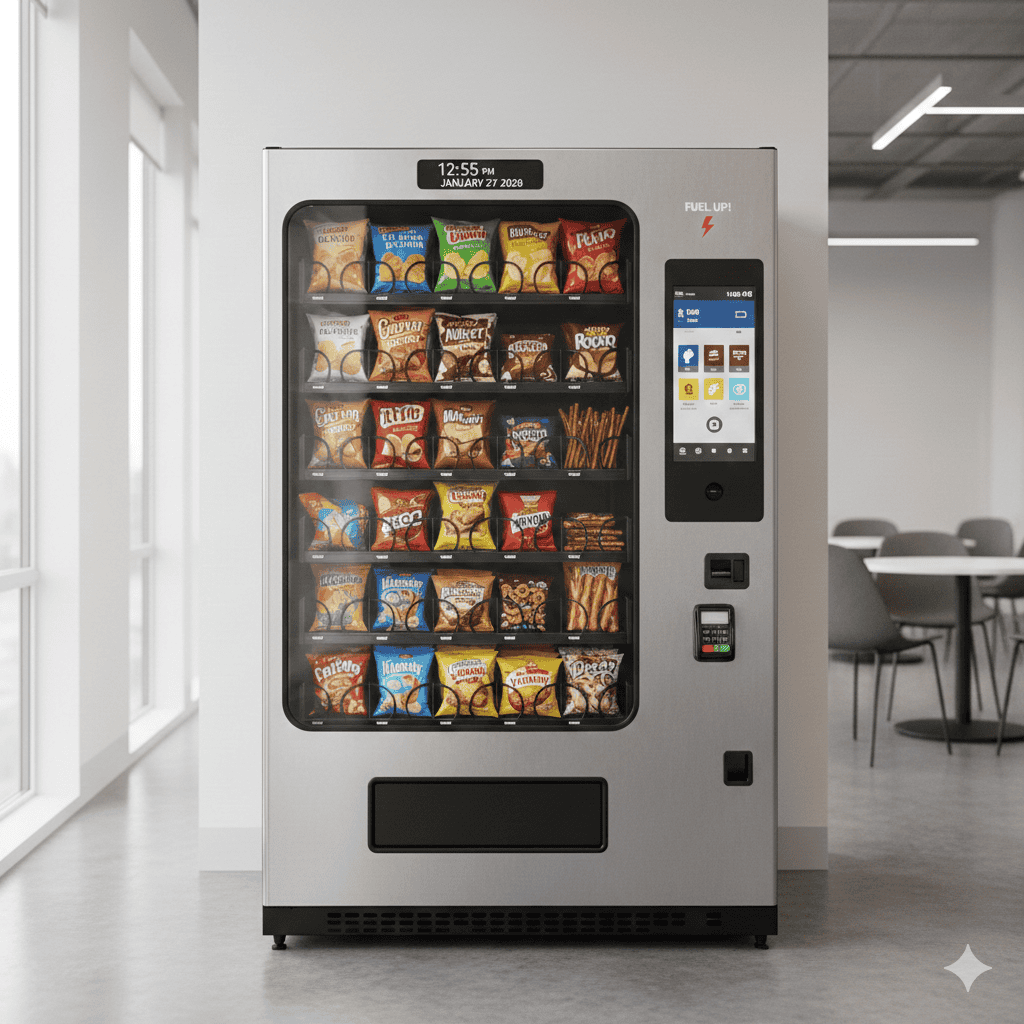
Who are the biggest snack vending machine manufacturers?
Crane Merchandising Systems leads the North American market with over 50 years of manufacturing experience. Their Merchant series dominates commercial vending operations, offering machines that handle 30-45 product selections with proven reliability. Crane machines typically cost $3,000-$5,500 depending on configuration and payment systems.
Automated Merchandising Systems (AMS) specializes in combo machines that vend both snacks and beverages. Their Sensit line uses infrared sensors to guarantee product delivery, addressing the industry’s biggest customer complaint. AMS machines range from $4,000-$6,500 and feature modular designs that simplify repairs.
Seaga Manufacturing targets budget-conscious operators with machines priced between $2,200-$4,000. Their Infinity series offers solid construction at lower price points, though they lack some premium features found in Crane or AMS units. Seaga works well for operators testing new locations or managing high-theft environments where lower capital investment reduces risk.
Jofemar from Spain brings European engineering to the US market. Their Vision series uses glass fronts and LED lighting to create visually appealing installations that drive impulse purchases. Jofemar machines cost $4,500-$7,000 but generate 15-20% higher sales per location according to operator surveys, offsetting the premium pricing.
What features should entrepreneurs prioritize in snack machines?
Cashless payment systems now account for 63% of all vending transactions according to the National Automatic Merchandising Association. Machines must accept credit cards, mobile payments, and contactless options. Manufacturers like Crane and AMS offer integrated solutions, while older models require third-party retrofits costing $400-$800.
Guaranteed delivery systems protect your reputation and revenue. Infrared sensors, weight scales, or drop detection ensure customers receive their purchases or get automatic refunds. This technology reduces service calls by 40% and eliminates the negative word-of-mouth that kills vending locations.
Energy efficiency directly impacts profitability. Energy Star-rated machines consume 30-40% less electricity than standard models, saving $100-$200 annually per machine. LED lighting, efficient compressors, and smart sleep modes pay for themselves within 18-24 months while reducing your environmental footprint.
Remote monitoring capabilities with AI features let you track inventory and sales without visiting locations. Telematics systems from manufacturers or third-party providers like Cantaloupe and 365 Retail Markets send real-time alerts when products sell out or machines malfunction.
This technology optimizes restocking routes and prevents lost sales from empty machines.
How much do commercial snack vending machines cost?
Entry-level machines from manufacturers like Seaga start at $2,200-$2,800 for basic models with 30-35 selections. These work for low-traffic locations or operators building initial inventory on limited budgets.
Mid-range machines from Crane, AMS, and USI cost $3,500-$5,000. These represent the industry standard, offering 35-45 selections, reliable delivery systems, and modern payment options. Most successful operators build their routes with machines in this price range.
Premium machines with advanced features cost $5,500-$8,000. Jofemar’s glass-front Vision series, Crane’s multimedia-enabled units, and AMS’s combo machines with extensive customization fall into this category. High-traffic locations with daily sales exceeding $100 justify this investment.
Used machines offer another path. Refurbished units from reputable dealers cost 40-60% less than new machines but require careful inspection. Check the compressor, bill validator, and delivery mechanism. Budget an additional $500-$1,000 for repairs and upgrades within the first year of operation.
Which manufacturers offer the best customer support?
Crane Merchandising Systems maintains 17 service centers across North America with certified technicians available within 24 hours for most locations. Their parts inventory ensures same-day shipping for common components. Crane’s support infrastructure makes them the preferred choice for operators managing 20+ machines who need reliable technical backup.
AMS provides comprehensive training programs for new operators, including three-day intensive courses at their factory in Iowa. They offer online troubleshooting resources and maintain active operator forums where experienced users help newcomers solve problems. This community support proves invaluable for first-time vending entrepreneurs.
Seaga partners with third-party service networks rather than maintaining company-owned centers. This creates inconsistent support quality depending on your location. However, Seaga machines use straightforward mechanical systems that competent technicians can service without specialized training.
Manufacturer warranties typically cover 1-3 years on major components, with 90 days on wear items like bill validators and motors. Extended warranties cost $200-$500 annually but provide peace of mind for operators without mechanical expertise.
What’s the difference between snack-only and combo vending machines?
Snack-only machines dedicate all space to chips, candy, pastries, and packaged foods. They offer 30-50 selections and work best in locations with separate beverage vending. These machines cost less ($2,500-$4,500) and require simpler maintenance since they lack refrigeration systems.
Combo machines include both snack and cold beverage sections in a single unit. They suit smaller locations where space limits the number of machines you can install. Combo units cost more ($4,500-$7,000) and consume more electricity but eliminate the need for separate beverage machines.
The choice depends on location characteristics. High-traffic areas with space for multiple machines perform better with specialized snack and beverage units—customers appreciate more selection and don’t wait while someone contemplates 50 choices. Limited-space locations like small offices benefit from combo machines that provide variety without consuming excessive floor space.
How reliable are different snack machine manufacturers?
Industry data from vending management software providers shows Crane machines average 94% uptime with proper maintenance. Their mechanical systems use proven designs refined over decades. Most service calls involve consumable parts like bill validators rather than structural failures.
AMS machines achieve 91-93% uptime, with their Sensit delivery guarantee system occasionally requiring recalibration. The infrared sensors need cleaning every 3-4 months in dusty environments. Overall reliability matches Crane for operators who follow maintenance schedules.
Seaga machines show more variable performance, ranging from 85-92% uptime depending on model year and usage intensity. Their lower price point reflects less robust construction, but proper placement in moderate-traffic locations produces acceptable reliability.
Reliability also depends on operator practices. Machines serviced every 7-10 days with regular cleaning last significantly longer than neglected units. The manufacturer matters less than consistent maintenance for long-term performance.
What are the hidden costs of owning vending machines?
Location commissions consume 10-30% of gross sales depending on site type. Schools and hospitals demand higher percentages (20-30%) while offices and retail locations charge less (10-15%). These commissions directly reduce your profit margins and must factor into manufacturer decisions—higher-performing premium machines may justify their cost in commission-heavy locations.
Product spoilage wastes 5-8% of snack inventory according to vending operator associations. Machines in climate-controlled locations experience less spoilage than those in warehouses or outdoor settings. Some manufacturers offer better temperature control and air circulation, reducing product loss.
Credit card processing fees add 2-4% to every cashless transaction. Your manufacturer choice affects these costs—some integrate with specific processors while others remain processor-agnostic, letting you negotiate better rates.
Routine maintenance requires $300-$600 annually per machine for cleaning supplies, replacement parts, and service calls. Manufacturers with better parts availability and simpler designs reduce these ongoing expenses.
Should entrepreneurs buy new or used vending machines?
New machines offer full warranties, current technology, and modern payment systems. You avoid inheriting mechanical problems from previous operators. The $3,500-$5,000 investment buys predictable performance and establishes vendor relationships with manufacturers for parts and support.
Used machines reduce initial capital requirements by 40-60%, letting entrepreneurs start with 3-4 machines for the cost of 1-2 new units. This accelerates route building and generates revenue faster. However, you inherit wear-and-tear issues and may need immediate repairs.
The best strategy combines both approaches. Buy 1-2 new machines from a major manufacturer to establish support relationships and learn modern systems. Add used machines from the same manufacturer to expand your route at lower cost. This balances financial risk while building operational expertise.
Avoid extremely old machines (10+ years) regardless of price. Parts become unavailable, and cashless payment retrofits cost nearly as much as replacing the entire machine.
What warranty and support should you expect?
Standard warranties cover 1 year on parts and labor for major components including compressors, control boards, and delivery mechanisms. Extended warranties adding 2-3 years cost $200-$500 depending on machine value.
Parts availability separates top manufacturers from problematic ones. Crane and AMS stock common components with next-day shipping to most locations. Seaga and smaller manufacturers sometimes require 3-7 day waits for specialized parts.
Technical support responsiveness varies dramatically. Crane provides phone support during business hours with typical wait times under 10 minutes. Smaller manufacturers may offer only email support with 24-48 hour response times.
Ask manufacturers these questions before purchasing:
- How quickly can technicians reach my operating area?
- What’s the average parts delivery time for common repairs?
- Do you offer operator training on basic maintenance?
- What’s included in the standard warranty versus extended coverage?
How do you evaluate vending machine manufacturers?
Start by contacting 3-5 established operators in your area through vending associations or online forums. Ask which manufacturers they use and why. Experienced operators provide unfiltered opinions about reliability, support quality, and long-term costs that manufacturer marketing materials never reveal.
Request demonstrations of different machines before purchasing. Test the user interface, check product loading procedures, and evaluate build quality. Flimsy plastic components and rough edges indicate cost-cutting that leads to premature failures.
Review the manufacturer’s financial stability through business databases like Dun & Bradstreet. Companies in business for 20+ years with strong credit ratings will support your machines long-term. Startups and struggling manufacturers may disappear, leaving you without parts or support.
Calculate total cost of ownership over 5 years, including purchase price, maintenance, commission rates, and expected revenue. A $2,500 machine generating $3,000 annually with $800 in costs underperforms a $4,500 machine producing $4,500 annually with $900 in costs, despite the higher initial investment.
Key Takeaways
Crane Merchandising Systems and Automated Merchandising Systems represent the gold standard for entrepreneurs serious about building vending businesses. Their combination of reliability, support infrastructure, and resale value justifies premium pricing for operators managing multiple machines.
Seaga serves budget-conscious operators well for testing locations or environments where theft risk demands lower capital investment. Their machines perform adequately with proper maintenance and realistic expectations.
Focus on guaranteed delivery systems and cashless payment integration regardless of manufacturer these features directly impact customer satisfaction and revenue generation. Remote monitoring capabilities become essential once you operate 5+ machines, dramatically improving route efficiency.
The vending machine you choose affects profitability for 7-10 years. Invest time researching manufacturers, talking with experienced operators, and calculating total ownership costs before making decisions based solely on purchase price.
Top Snack Machine Manufacturers: A Guide for Entrepreneurs
The global vending machine market reached $18.3 billion in 2023 and continues growing as automated retail expands into offices, schools, hospitals, and public spaces. For entrepreneurs entering this industry, choosing the right manufacturer determines your profit margins, maintenance costs, and long-term business viability. This guide examines the leading snack machine manufacturers and what separates quality vendors from problematic ones.
Who are the biggest snack vending machine manufacturers?
Crane Merchandising Systems leads the North American market with over 50 years of manufacturing experience. Their Merchant series dominates commercial vending operations, offering machines that handle 30-45 product selections with proven reliability. Crane machines typically cost $3,000-$5,500 depending on configuration and payment systems.
Automated Merchandising Systems (AMS) specializes in combo machines that vend both snacks and beverages. Their Sensit line uses infrared sensors to guarantee product delivery, addressing the industry’s biggest customer complaint. AMS machines range from $4,000-$6,500 and feature modular designs that simplify repairs.
Seaga Manufacturing targets budget-conscious operators with machines priced between $2,200-$4,000. Their Infinity series offers solid construction at lower price points, though they lack some premium features found in Crane or AMS units. Seaga works well for operators testing new locations or managing high-theft environments where lower capital investment reduces risk.
Jofemar from Spain brings European engineering to the US market. Their Vision series uses glass fronts and LED lighting to create visually appealing installations that drive impulse purchases. Jofemar machines cost $4,500-$7,000 but generate 15-20% higher sales per location according to operator surveys, offsetting the premium pricing.
What features should entrepreneurs prioritize in snack machines?
Cashless payment systems now account for 63% of all vending transactions according to the National Automatic Merchandising Association. Machines must accept credit cards, mobile payments, and contactless options. Manufacturers like Crane and AMS offer integrated solutions, while older models require third-party retrofits costing $400-$800.
Guaranteed delivery systems protect your reputation and revenue. Infrared sensors, weight scales, or drop detection ensure customers receive their purchases or get automatic refunds. This technology reduces service calls by 40% and eliminates the negative word-of-mouth that kills vending locations.
Energy efficiency directly impacts profitability. Energy Star-rated machines consume 30-40% less electricity than standard models, saving $100-$200 annually per machine. LED lighting, efficient compressors, and smart sleep modes pay for themselves within 18-24 months while reducing your environmental footprint.
Remote monitoring capabilities let you track inventory and sales without visiting locations. Telematics systems from manufacturers or third-party providers like Cantaloupe and 365 Retail Markets send real-time alerts when products sell out or machines malfunction. This technology optimizes restocking routes and prevents lost sales from empty machines.
How much do commercial snack vending machines cost?
Entry-level machines from manufacturers like Seaga start at $2,200-$2,800 for basic models with 30-35 selections. These work for low-traffic locations or operators building initial inventory on limited budgets.
Mid-range machines from Crane, AMS, and USI cost $3,500-$5,000. These represent the industry standard, offering 35-45 selections, reliable delivery systems, and modern payment options. Most successful operators build their routes with machines in this price range.
Premium machines with advanced features cost $5,500-$8,000. Jofemar’s glass-front Vision series, Crane’s multimedia-enabled units, and AMS’s combo machines with extensive customization fall into this category. High-traffic locations with daily sales exceeding $100 justify this investment.
Used machines offer another path. Refurbished units from reputable dealers cost 40-60% less than new machines but require careful inspection. Check the compressor, bill validator, and delivery mechanism. Budget an additional $500-$1,000 for repairs and upgrades within the first year of operation.
Which manufacturers offer the best customer support?
Crane Merchandising Systems maintains 17 service centers across North America with certified technicians available within 24 hours for most locations. Their parts inventory ensures same-day shipping for common components. Crane’s support infrastructure makes them the preferred choice for operators managing 20+ machines who need reliable technical backup.
AMS provides comprehensive training programs for new operators, including three-day intensive courses at their factory in Iowa. They offer online troubleshooting resources and maintain active operator forums where experienced users help newcomers solve problems. This community support proves invaluable for first-time vending entrepreneurs.
Seaga partners with third-party service networks rather than maintaining company-owned centers. This creates inconsistent support quality depending on your location. However, Seaga machines use straightforward mechanical systems that competent technicians can service without specialized training.
Manufacturer warranties typically cover 1-3 years on major components, with 90 days on wear items like bill validators and motors. Extended warranties cost $200-$500 annually but provide peace of mind for operators without mechanical expertise.
What’s the difference between snack-only and combo vending machines?
Snack-only machines dedicate all space to chips, candy, pastries, and packaged foods. They offer 30-50 selections and work best in locations with separate beverage vending. These machines cost less ($2,500-$4,500) and require simpler maintenance since they lack refrigeration systems.
Combo machines include both snack and cold beverage sections in a single unit. They suit smaller locations where space limits the number of machines you can install. Combo units cost more ($4,500-$7,000) and consume more electricity but eliminate the need for separate beverage machines.
The choice depends on location characteristics. High-traffic areas with space for multiple machines perform better with specialized snack and beverage units—customers appreciate more selection and don’t wait while someone contemplates 50 choices. Limited-space locations like small offices benefit from combo machines that provide variety without consuming excessive floor space.
How reliable are different snack machine manufacturers?
Industry data from vending management software providers shows Crane machines average 94% uptime with proper maintenance. Their mechanical systems use proven designs refined over decades. Most service calls involve consumable parts like bill validators rather than structural failures.
AMS machines achieve 91-93% uptime, with their Sensit delivery guarantee system occasionally requiring recalibration. The infrared sensors need cleaning every 3-4 months in dusty environments. Overall reliability matches Crane for operators who follow maintenance schedules.
Seaga machines show more variable performance, ranging from 85-92% uptime depending on model year and usage intensity. Their lower price point reflects less robust construction, but proper placement in moderate-traffic locations produces acceptable reliability.
Reliability also depends on operator practices. Machines serviced every 7-10 days with regular cleaning last significantly longer than neglected units. The manufacturer matters less than consistent maintenance for long-term performance.
What are the hidden costs of owning vending machines?
Location commissions consume 10-30% of gross sales depending on site type. Schools and hospitals demand higher percentages (20-30%) while offices and retail locations charge less (10-15%). These commissions directly reduce your profit margins and must factor into manufacturer decisions—higher-performing premium machines may justify their cost in commission-heavy locations.
Product spoilage wastes 5-8% of snack inventory according to vending operator associations. Machines in climate-controlled locations experience less spoilage than those in warehouses or outdoor settings. Some manufacturers offer better temperature control and air circulation, reducing product loss.
Credit card processing fees add 2-4% to every cashless transaction. Your manufacturer choice affects these costs—some integrate with specific processors while others remain processor-agnostic, letting you negotiate better rates.
Routine maintenance requires $300-$600 annually per machine for cleaning supplies, replacement parts, and service calls. Manufacturers with better parts availability and simpler designs reduce these ongoing expenses.
Should entrepreneurs buy new or used vending machines?
New machines offer full warranties, current technology, and modern payment systems. You avoid inheriting mechanical problems from previous operators. The $3,500-$5,000 investment buys predictable performance and establishes vendor relationships with manufacturers for parts and support.
Used machines reduce initial capital requirements by 40-60%, letting entrepreneurs start with 3-4 machines for the cost of 1-2 new units. This accelerates route building and generates revenue faster. However, you inherit wear-and-tear issues and may need immediate repairs.
The best strategy combines both approaches. Buy 1-2 new machines from a major manufacturer to establish support relationships and learn modern systems. Add used machines from the same manufacturer to expand your route at lower cost. This balances financial risk while building operational expertise.
Avoid extremely old machines (10+ years) regardless of price. Parts become unavailable, and cashless payment retrofits cost nearly as much as replacing the entire machine.
What warranty and support should you expect?
Standard warranties cover 1 year on parts and labor for major components including compressors, control boards, and delivery mechanisms. Extended warranties adding 2-3 years cost $200-$500 depending on machine value.
Parts availability separates top manufacturers from problematic ones. Crane and AMS stock common components with next-day shipping to most locations. Seaga and smaller manufacturers sometimes require 3-7 day waits for specialized parts.
Technical support responsiveness varies dramatically. Crane provides phone support during business hours with typical wait times under 10 minutes. Smaller manufacturers may offer only email support with 24-48 hour response times.
Ask manufacturers these questions before purchasing:
- How quickly can technicians reach my operating area?
- What’s the average parts delivery time for common repairs?
- Do you offer operator training on basic maintenance?
- What’s included in the standard warranty versus extended coverage?
How do you evaluate vending machine manufacturers?
Start by contacting 3-5 established operators in your area through vending associations or online forums. Ask which manufacturers they use and why. Experienced operators provide unfiltered opinions about reliability, support quality, and long-term costs that manufacturer marketing materials never reveal.
Request demonstrations of different machines before purchasing. Test the user interface, check product loading procedures, and evaluate build quality. Flimsy plastic components and rough edges indicate cost-cutting that leads to premature failures.
Review the manufacturer’s financial stability through business databases like Dun & Bradstreet. Companies in business for 20+ years with strong credit ratings will support your machines long-term. Startups and struggling manufacturers may disappear, leaving you without parts or support.
Calculate total cost of ownership over 5 years, including purchase price, maintenance, commission rates, and expected revenue. A $2,500 machine generating $3,000 annually with $800 in costs underperforms a $4,500 machine producing $4,500 annually with $900 in costs, despite the higher initial investment.
Key Takeaways
Crane Merchandising Systems and Automated Merchandising Systems represent the gold standard for entrepreneurs serious about building vending businesses. Their combination of reliability, support infrastructure, and resale value justifies premium pricing for operators managing multiple machines.
Seaga serves budget-conscious operators well for testing locations or environments where theft risk demands lower capital investment. Their machines perform adequately with proper maintenance and realistic expectations.
Focus on guaranteed delivery systems and cashless payment integration regardless of manufacturer—these features directly impact customer satisfaction and revenue generation. Remote monitoring capabilities become essential once you operate 5+ machines, dramatically improving route efficiency.
The vending machine you choose affects profitability for 7-10 years. Invest time researching manufacturers, talking with experienced operators, and calculating total ownership costs before making decisions based solely on purchase price.
Frequently Asked Questions
How much money can you make from one snack vending machine?
A well-placed snack machine generates $50-$150 per week in gross sales, translating to $2,600-$7,800 annually. After product costs (30-35%), location commissions (10-30%), and operating expenses, expect net profits of $1,000-$3,500 per machine yearly. High-traffic locations like hospitals and large office buildings perform at the higher end, while small offices generate lower returns. Your manufacturer choice impacts profitability through machine reliability and customer satisfaction rates.
How long does a vending machine last?
Quality machines from Crane or AMS last 10-15 years with proper maintenance. Budget brands like Seaga typically provide 7-10 years of service. The compressor, control board, and delivery mechanism determine lifespan. Machines in climate-controlled indoor locations outlast those exposed to temperature extremes. Regular cleaning every 7-10 days and preventive maintenance extend machine life significantly.
Do I need special permits to operate vending machines?
Most states require a general business license and sales tax permit for vending operations. Some municipalities require additional vending-specific licenses costing $25-$200 annually. Health permits become necessary if you sell perishable items, though shelf-stable snacks typically avoid these requirements. Check with your county clerk and state revenue department for specific regulations in your operating area.
What’s the best location for snack vending machines?
Office buildings with 50+ employees provide consistent daily traffic and climate-controlled environments. Manufacturing facilities and warehouses generate strong sales during shift changes. Hospitals and medical facilities offer 24/7 traffic but demand higher commission rates (20-30%). Schools can be profitable but often restrict product selection and require extensive insurance. Avoid locations with competing machines within 100 feet or fewer than 30 daily visitors.
Can you really start a vending business with one machine?
Yes, but profitability requires realistic expectations. One machine generating $75 weekly in sales produces roughly $2,000 annual net profit after expenses. This won’t replace full-time income but validates your ability to secure locations, maintain equipment, and manage inventory. Most successful operators start with 1-2 machines, prove the business model, then expand to 10-20 machines within 18-24 months for meaningful income.
What products sell best in snack vending machines?
Chips account for 35-40% of snack machine sales, with variety packs of Lay’s, Doritos, and Cheetos leading. Candy bars represent 25-30% of sales, particularly Snickers, Reese’s, and M&Ms. Cookies and crackers contribute 15-20%. Healthier options like granola bars, nuts, and protein snacks now comprise 10-15% of sales in office environments. Test product mix by location—factory workers prefer salty snacks while office workers buy more variety.
How often do vending machines need to be restocked?
High-traffic machines require weekly restocking to prevent sellouts that cost sales. Medium-traffic locations need service every 10-14 days. Low-traffic machines can go 2-3 weeks between visits. Remote monitoring systems alert you when specific products sell out, letting you optimize routes and restock only when necessary. Plan routes geographically to service multiple machines efficiently during each trip.
Is vending machine business passive income?
No—vending requires active management despite common misconceptions. You’ll spend 5-10 hours weekly per 10 machines on restocking, maintenance, cash collection, and location relationship management. Remote monitoring and cashless payments reduce some workload, but machines still need physical attention. Think of vending as a part-time business that can grow into full-time income with 30+ machines, not as truly passive investment like real estate or index funds.
Free newsletter
Get the Work Insiders weekly
One email a week: the recruiting and HR tech news that mattered, the tools we just added to the directory, and one practical guide. No spam, and you can unsubscribe in one click.