

Key Takeaway: Research shows that engineers who negotiate their salary receive an average increase of 18.83% from their original offers, with some securing up to 100% increases. Yet 55% of candidates never negotiate at all.
The secret to successful salary negotiation isn’t being aggressive it’s being specific, data-backed, and demonstrating how your technical expertise translates to business value.
Engineers have unique leverage during salary negotiations. Bureau of Labor Statistics data shows the median engineering wage is $97,310, significantly above the $49,500 national median.
Tech company compensation data from Pave reveals that software engineers with specific technical skills can command 20-30% premiums over baseline roles. The key is knowing exactly what to say and when to say it.
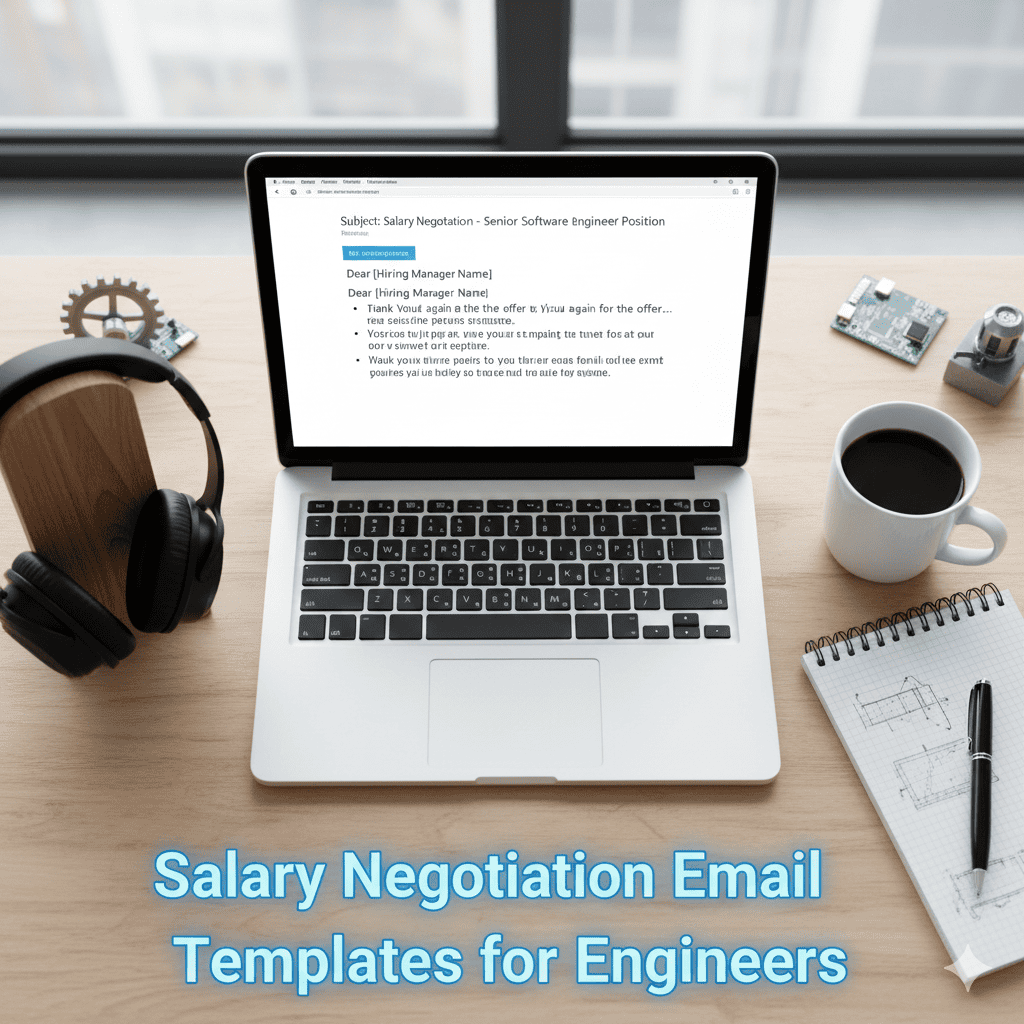
When Should Engineers Send Salary Negotiation Emails?
Send your salary negotiation email within 24-48 hours of receiving the offer but before you’ve verbally accepted anything. This window gives you time to research market rates while the company is still expecting a response.
The ideal timing is after you receive a formal written offer with specific compensation details. Don’t negotiate during early interview rounds when you haven’t been selected yet. Wait until the company has invested time and resources into choosing you specifically. At that point, they want you to accept which gives you negotiating leverage.
Never negotiate salary after you’ve already said “yes” to an offer. Once you accept, your leverage evaporates. The company assumes you’re committed, and requesting changes afterward makes you seem indecisive or difficult.
If the recruiter pressures you for an immediate answer, it’s completely professional to say: “Thank you for the offer. I’m excited about this opportunity and would like to review the details carefully. Can I provide my response by [specific date 2-3 days away]?” This buys you time to craft your negotiation strategy.
What Salary Data Should Engineers Use in Negotiations?
Use three types of data to back your salary request: market compensation for your specific engineering role, geographic location adjustments, and your relevant technical expertise.
Software engineer salaries vary dramatically by location. For example, mid-level software engineers in San Francisco earn $120,000-$150,000 annually according to Glassdoor and Payscale data, while the same role in Austin might pay $95,000-$120,000. Reference specific data for your city when making your case.
For specialized engineering roles, cite industry-specific compensation. Robert Half’s 2025 Salary Guide provides detailed engineering salary ranges. Sites like Levels.fyi show tech company compensation including base salary, equity, and bonuses—critical for software and hardware engineers negotiating with major tech companies.
Highlight any specialized skills that command premium compensation. Engineers with AI/ML expertise, cloud architecture experience, or specific technology certifications (AWS, Azure, Kubernetes) can justify 15-25% salary premiums over generalist roles in the same discipline.
How Do I Quantify My Value as an Engineer in a Salary Email?
Translate your technical work into business outcomes using specific numbers. Companies pay more for engineers who understand business impact, not just technical specifications.
Instead of “I have extensive experience with Python and database optimization,” write “I optimized database queries that reduced server costs by $50,000 annually and improved application response time by 40%.” The first statement describes what you know. The second describes what you accomplish.
Research on engineering compensation shows that engineers who can demonstrate business impact reduced costs, improved efficiency, revenue generation—command premium salaries. Quantify your achievements: percentage improvements, dollars saved, time reduced, problems prevented.
For engineers early in their careers without extensive business metrics, highlight relevant technical skills and specific projects. “Built a microservices architecture handling 10,000 requests per second” or “Led the migration from monolithic to containerized infrastructure serving 50,000 daily users” shows concrete capability.
What’s the Best Email Template for Engineers Negotiating Initial Offers?
Use this template when you receive a job offer and want to negotiate higher base salary:
Subject: [Company Name] Job Offer – [Your Name]
Dear [Hiring Manager/Recruiter Name],
Thank you for the offer to join [Company Name] as a [Job Title]. I’m excited about the opportunity to contribute to [specific project, team, or technology you discussed during interviews].
After reviewing the offer details, I’d like to discuss the base salary. Based on my research using [Glassdoor, Levels.fyi, Robert Half Salary Guide], the typical compensation range for [Job Title] roles with my experience level in [Location] is [X – $Y]. Additionally, given my specific expertise in [1-2 key technical skills relevant to the role], I was expecting compensation closer to [ Your Target Salary].
I’m confident I can deliver immediate value to your team. In my current/previous role, I [specific quantified achievement that demonstrates business impact]. I’m excited to bring this same results-focused approach to [Company Name].
Would you be open to discussing a base salary of [$Your Target Salary]? I’m flexible and happy to discuss the overall compensation package, including [equity/bonuses/benefits] if adjusting base salary isn’t possible.
I remain very enthusiastic about this opportunity and am confident we can reach an agreement that works for both of us. Are you available for a brief call tomorrow or Thursday to discuss?
Best regards,
[Your Name]
[Your Phone Number]
This template works because it expresses enthusiasm, provides data-backed reasoning, demonstrates value through quantified achievements, and opens dialogue rather than making demands.
How Do Engineers Negotiate When They Have Competing Offers?
Mentioning competing offers strengthens your position, but do it tactfully. Frame other offers as context for your decision rather than as threats.
Use this approach when you have multiple offers:
Subject: [Company Name] Offer Discussion – [Your Name]
Dear [Hiring Manager Name],
Thank you again for the offer to join [Company Name] as a [Job Title]. I’ve been thoroughly impressed by [specific aspect of company/team/technology], and this is my top choice.
I want to be transparent: I’m currently considering another offer for a [similar role] with a base salary of [$Competing Offer Amount]. However, I’m much more excited about the work at [Company Name] because [specific reason related to technology, team, or mission].
Given the market conditions and my specific experience with [relevant technical skill], would [Company Name] be able to increase the base salary to [$Your Target—slightly above competing offer]? This would make my decision straightforward.
I’m committed to making a decision by [specific date], and I’m hopeful we can find alignment on compensation. Would you be available for a brief call to discuss?
Best regards,
[Your Name]
Research from multiple 2024-2025 studies shows that 66% of workers who negotiated got what they asked for. Competing offers significantly increase success rates, but only when presented professionally, not as ultimatums.
What If the Company Says Their Offer Is Final?
When a company claims the salary is “final,” test whether that’s truly absolute or just initial resistance. Many “final” offers have flexibility for the right candidate.
Respond with this approach:
Subject: Re: [Company Name] Job Offer
Dear [Hiring Manager Name],
Thank you for clarifying the salary constraints. I understand budget limitations and appreciate your transparency.
Given that base salary has limited flexibility, could we explore adjusting other components of the compensation package? Specifically, I’d be interested in discussing:
- Signing bonus: A one-time [$Amount] signing bonus to bridge the gap between the current offer and market rate
- Earlier salary review: Commitment to a compensation review at [6 months] rather than the standard annual review, with adjustment based on performance
- Equity/Stock options: Increasing the equity component by [percentage or number of shares]
- Professional development: Budget for [certifications, conferences, training] that enhance my value to the team
I’m particularly excited about [specific aspect of the role], and I believe we can structure a package that works for both of us. Which of these options might be possible to explore?
Best regards,
[Your Name]
This approach acknowledges their constraint while proposing creative alternatives. Even if they said salary is fixed, signing bonuses, accelerated reviews, or increased equity often come from different budget pools.
How Should Engineers Negotiate Equity and Total Compensation?
For engineers joining startups or tech companies, equity can represent significant value beyond base salary. Negotiate equity separately from base salary.
Ask these specific questions about equity:
Dear [Hiring Manager Name],
Thank you for the offer including [X] stock options. To fully evaluate the total compensation package, could you provide additional details about the equity component?
Specifically, I’d like to understand:
- Valuation: What is the current strike price and most recent company valuation?
- Vesting schedule: Is this standard 4-year vesting with 1-year cliff, or different?
- Outstanding shares: How many shares are currently outstanding (to calculate my percentage ownership)?
- Funding stage: Are you planning additional funding rounds that would dilute current equity?
- Liquidity timeline: What’s the expected path to liquidity (acquisition, IPO, secondary sales)?
Given my experience with [relevant technical expertise] and the market rate for engineers with my background, I’d like to discuss increasing the equity grant to [Your Target Number] options. This would better reflect the value I’ll bring to the team, particularly in [specific area where you’ll contribute].
Are you available to discuss these equity details and the potential adjustment?
Best regards,
[Your Name]
Many engineers focus exclusively on base salary and accept equity grants without fully understanding them. Compensation data shows that for senior engineers at startups, equity can represent 30-50% of total compensation value. Negotiate both components thoughtfully.
What Email Template Works for Engineers Requesting Raises?
Use this template when you’re already employed and requesting a salary increase:
Subject: Salary Review Discussion – [Your Name]
Dear [Manager Name],
I’d like to schedule time to discuss my compensation. I’ve greatly enjoyed my time as a [Current Title] at [Company] for the past [X months/years], and I’m proud of what our team has accomplished.
Since my last salary review, I’ve taken on expanded responsibilities and delivered significant results:
- [Specific achievement #1 with quantified business impact]
- [Specific achievement #2 with quantified business impact]
- [Specific achievement #3 with quantified business impact]
I’ve researched the market rate for [Current Title] roles with my experience level in [Location], and the typical range is [X – $Y] according to [Robert Half, Glassdoor, Levels.fyi]. Given my contributions and market data, I’d like to discuss adjusting my base salary to [ Your Target Salary].
I’m committed to continuing to deliver strong results for our team. Could we schedule 30 minutes this week to discuss this request?
Thank you for your consideration.
Best regards,
[Your Name]
Data shows that roughly one-third of workers requested raises in 2024, with the most common justifications being “market adjustment” and “promotion.” Engineers with documented achievements and market research have the strongest cases.
Should Engineers Negotiate Salary Over Email or Phone?
Start with email to document your request and provide time for both sides to think strategically, but be prepared to transition to phone or video for the actual negotiation conversation.
Email advantages: It gives you time to craft your message carefully, allows the hiring manager to discuss with HR and leadership before responding, creates a written record of what was discussed, and reduces pressure that can lead to accepting less than you want.
Phone/video advantages: It allows for real-time dialogue and clarification, lets you read tone and adjust your approach, enables faster resolution, and can build rapport that makes compromise easier.
The ideal sequence: Send your initial negotiation email outlining your request and reasoning. When they respond, suggest a brief call to “discuss the details.” Use the call for actual negotiation, then follow up with an email summarizing what you agreed to.
Never negotiate entirely over text or email without any voice conversation. Written-only negotiations miss nuance and can come across as transactional rather than collaborative. The combination of written documentation and verbal discussion produces the best outcomes.
What Mistakes Do Engineers Make in Salary Negotiation Emails?
Apologizing for negotiating. Never write “I’m sorry to ask, but…” or “I hope this isn’t too much trouble.” Negotiation is standard professional practice. Ask confidently.
Using vague language. “I was hoping for a bit more” is weak. “Based on market data, I’m requesting a base salary of $135,000” is clear and actionable.
Focusing only on personal needs. “I need more money because of student loans” doesn’t persuade employers. “My expertise in distributed systems will reduce infrastructure costs significantly” demonstrates value.
Negotiating too early. Don’t discuss specific salary expectations in initial phone screens. Wait until you have a written offer with details.
Accepting the first offer immediately. Research consistently shows that 94% of negotiated offers remain intact companies almost never rescind offers because you negotiated. Always counter-offer thoughtfully.
Failing to research market rates. Going into negotiations without data weakens your position. Spend 2-3 hours researching compensation for your specific role, location, and experience level before writing your email.
Being inflexible. If they can’t meet your salary target, explore alternatives: signing bonuses, equity, professional development budgets, remote work flexibility, additional vacation time. Total compensation includes more than base salary.
Quick Q&A
Q: When should engineers send salary negotiation emails?
A: Send your negotiation email within 24-48 hours of receiving a written offer, but before verbally accepting. This timing gives you space to research while the company expects a response. Never negotiate after accepting an offer or during early interviews before you have an offer.
Q: What’s the average salary increase engineers get from negotiating?
A: Research analyzing 2024-2025 studies shows that people who negotiated received an average 18.83% increase from original offers, with a minimum of 5% and some achieving 100% increases. About 66% of those who asked got what they requested.
Q: What salary data should I include in my negotiation email?
A: Reference specific sources like Glassdoor, Levels.fyi, Robert Half Salary Guide, or Bureau of Labor Statistics data for your engineering discipline. Include geographic location adjustments and mention specialized skills that command premiums (AI/ML, cloud architecture, specific certifications).
Q: How do I write a salary negotiation email as an engineer?
A: Include five key elements: express enthusiasm for the role, cite specific market data for your position, quantify your technical achievements with business impact, state your target salary clearly, and propose next steps for discussion. Always frame negotiation as finding mutual agreement, not making demands.
Q: Should I mention competing job offers in my salary negotiation?
A: Yes, but frame them as context for your decision rather than threats. Say something like: “I want to be transparent I have another offer at [$X], but [Company Name] is my top choice because [specific reason]. Can we discuss aligning the compensation?” This shows you’re in demand while emphasizing your genuine interest.
Q: What if the company says the salary offer is final?
A: Test if it’s truly final by proposing alternatives: signing bonuses, earlier salary reviews, increased equity, or professional development budgets. Many “final” base salaries have flexibility in other compensation components that come from different budget pools.
Q: Can I negotiate both salary and equity?
A: Yes, and you should. For tech companies and startups, equity can represent 30-50% of total compensation for senior engineers. Negotiate base salary first, then discuss equity grant size, vesting schedule, valuation, and ownership percentage separately.
Q: Will negotiating salary make the company withdraw the offer?
A: Almost never. Data shows that 94% of negotiated offers remain intact. Companies expect professional negotiation and build flexibility into initial offers. As long as your request is reasonable and data-backed, negotiating shows you understand your value.
Final Thoughts
Engineers have significant leverage in salary negotiations because technical skills are in high demand and difficult to replace. The median engineering salary of $97,310 is nearly double the national median but that’s just a starting point.
The engineers who earn top compensation are those who negotiate strategically using market data, quantify their business impact beyond just technical skills, and approach negotiations as collaborative problem-solving rather than confrontation.
Use these templates as starting points, customize them with your specific achievements and market research, and remember: 55% of candidates don’t negotiate at all. Simply by asking professionally and backing your request with data, you’re already ahead of the majority.
The salary you negotiate today compounds over your entire career. An extra $10,000 negotiated now becomes hundreds of thousands in lifetime earnings. Take the time to craft a strong negotiation email—your future self will thank you.
Free newsletter
Get the Work Insiders weekly
One email a week: the recruiting and HR tech news that mattered, the tools we just added to the directory, and one practical guide. No spam, and you can unsubscribe in one click.