

In the fast-paced world of engineering, architecture, and manufacturing, Computer-Aided Design (CAD) software remains the backbone of innovation. Companies worldwide rely on these tools to create precise 2D and 3D models, simulate real-world performance, and streamline production workflows.
With over 259,000 companies adopting CAD solutions globally, the market is dominated by a handful of powerhouses that balance power, usability, and integration. This article dives into the top 10 most-used CAD softwares by companies, based on market share data from sources like 6sense and G2 reviews, user adoption rates, and industry benchmarks.
We’ll explore their key features, ideal use cases, and why they’re staples in corporate toolkits. Whether you’re a mechanical engineer at a Fortune 500 firm or a designer in a startup, these tools are shaping the future of product development.
From Autodesk’s versatile suites to Dassault Systèmes’ high-end precision, these selections reflect a mix of 2D drafting, 3D modeling, and cloud-based collaboration.
Market leaders like AutoCAD hold nearly 40% share, underscoring the demand for reliable, scalable solutions. Let’s break them down.
1. AutoCAD (Autodesk)
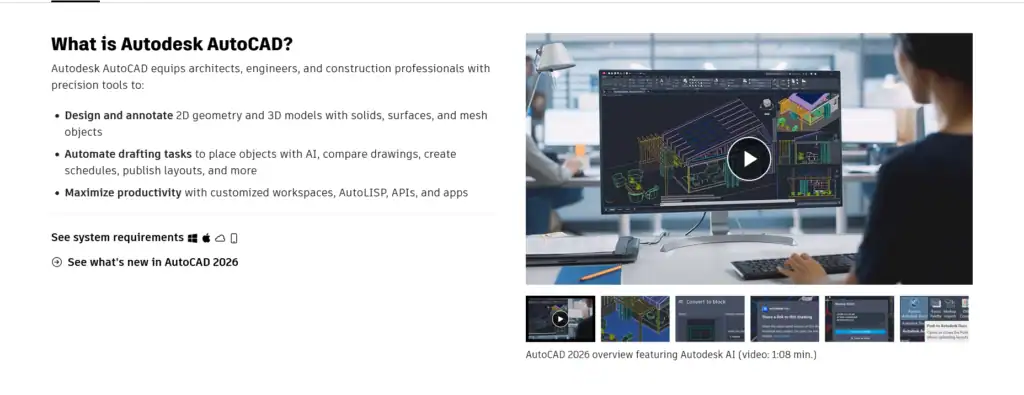
AutoCAD tops the charts as the most ubiquitous CAD software, with a staggering 39.29% market share in 2025.
Developed by Autodesk, this veteran tool excels in 2D drafting and 3D modeling, making it indispensable for architects, civil engineers, and manufacturers. Its precision tools, such as dynamic blocks and automated routines, accelerate workflows while ensuring compliance with industry standards like ISO and ANSI.
Companies like Boeing and Tesla use AutoCAD for everything from schematic drawings to complex assemblies.
The 2025 update introduces enhanced AI-driven automation for error detection and cloud collaboration via Autodesk Docs, reducing design iterations by up to 30%. Pricing starts at $1,865 annually, with robust mobile access for on-site tweaks. While its learning curve can be steep for beginners, its interoperability with formats like DWG and DXF cements its status as a corporate essential.
2. SolidWorks (Dassault Systèmes)
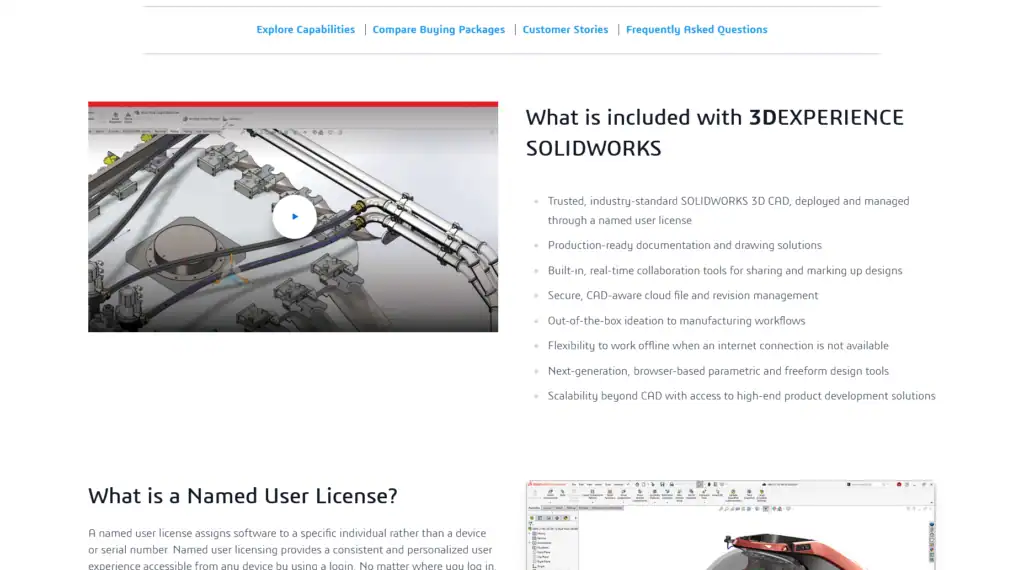
Holding 13.68% market share, SolidWorks is the go-to for mechanical and industrial design. This parametric 3D CAD powerhouse from Dassault Systèmes offers intuitive simulation, rendering, and finite element analysis (FEA), allowing engineers to test designs virtually before prototyping. Its assembly management and sheet metal tools shine in product development cycles.
Major firms like Ford and GE Aviation leverage SolidWorks for its seamless integration with CAM and PDM systems, cutting time-to-market by 25% on average. The 2025 version amps up cloud rendering and generative design features, powered by AI for topology optimization. Subscriptions run about $4,195 yearly, with add-ons for advanced simulation.
Though resource-intensive on hardware, its user-friendly interface and vast add-in ecosystem make it a favorite among mid-to-large enterprises.
3. Fusion 360 (Autodesk)

Autodesk’s cloud-native Fusion 360 claims fifth place in G2’s market presence rankings and is surging in popularity among SMEs. Combining CAD, CAM, CAE, and PCB design in one platform, it supports collaborative editing in real-time, ideal for distributed teams. Features like generative design and electronics integration help optimize for manufacturability.
Startups like DJI and established players such as NASA use it for rapid prototyping and simulation. In 2025, enhanced mesh modeling and API extensions boost customization.
At $545 per year for commercial use (free for hobbyists), it’s cost-effective with unlimited cloud storage. Its browser-based access eliminates hardware barriers, though offline mode limitations persist for some users.
4. SketchUp (Trimble)
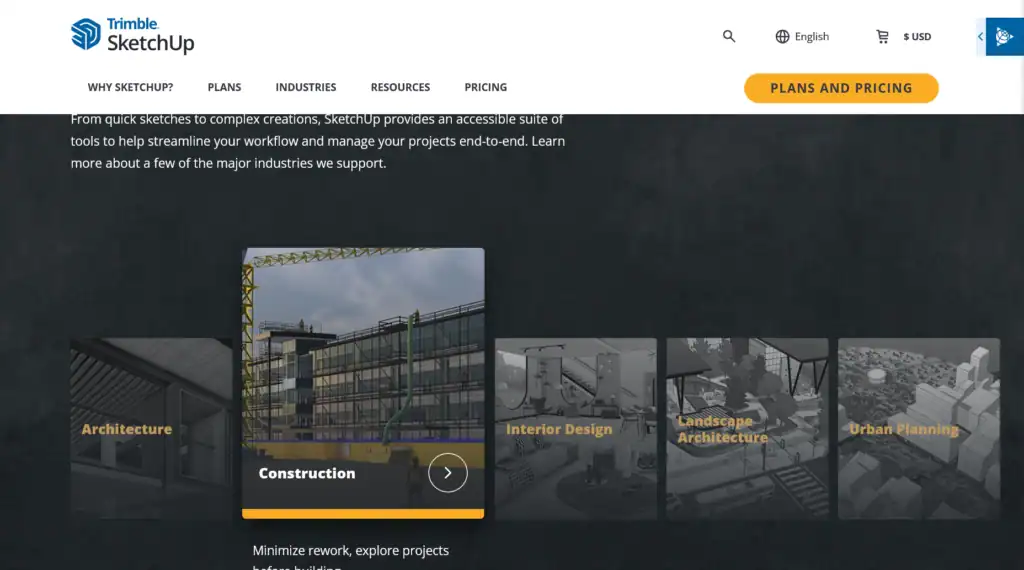
Leading G2’s popularity list, SketchUp’s intuitive 3D modeling has captured architects and interior designers globally. Trimble’s tool emphasizes push-pull extrusion and extensions via the 3D Warehouse, enabling quick conceptual visualizations. It’s lightweight, running on modest hardware.
Firms like IKEA and Zaha Hadid Architects rely on SketchUp for space planning and client presentations. The 2025 Pro version integrates better with BIM tools like Revit and adds VR export for immersive reviews. Priced at $299 annually, it’s accessible yet scalable with enterprise add-ons. Drawbacks include limited parametric capabilities, but its speed and community-driven plugins keep it indispensable.
5. Autodesk Inventor
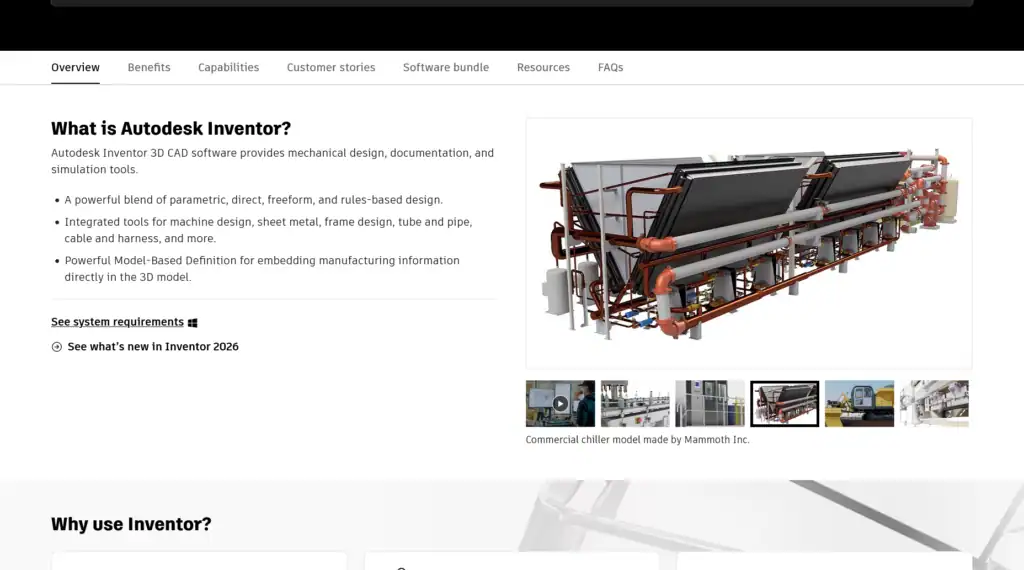
Autodesk Inventor ranks eighth on G2 but dominates mechanical engineering with robust 3D modeling and automation. It features iLogic for rule-based design and integrated FEA, streamlining frame and tube routing for machinery.
Companies such as John Deere and Airbus employ Inventor for its AnyCAD interoperability, importing data from competitors without translation errors. The 2025 release enhances factory design with AI-assisted layout optimization. Annual licensing at $2,310 includes simulation packs. While it requires solid hardware, its tight integration with Vault PDM elevates team efficiency.
6. CATIA (Dassault Systèmes)

CATIA’s surface modeling prowess makes it a staple in aerospace and automotive, used by over 100,000 companies. This multi-CAD suite from Dassault excels in Class-A surfacing, composites, and systems engineering on the 3DEXPERIENCE platform.
Giants like Boeing (for the 777) and BMW trust CATIA for complex assemblies and PLM integration. 2025 updates focus on sustainable design simulations. Pricing is enterprise-level (custom quotes, often $10K+ per seat), but its precision justifies the investment. The steep learning curve is offset by unmatched accuracy in high-stakes industries.
7. PTC Creo

Ninth on G2’s list, PTC Creo’s parametric and direct modeling hybrid supports top-down design and AR visualization. It’s renowned for behavioral modeling and additive manufacturing prep.
Coca-Cola and Caterpillar use Creo for innovative packaging and heavy machinery. The 2025 iteration adds AI-driven variant management. Subscriptions start at $2,480 yearly. Its flexibility across industries is a boon, though customization demands expertise.
8. Solid Edge (Siemens)
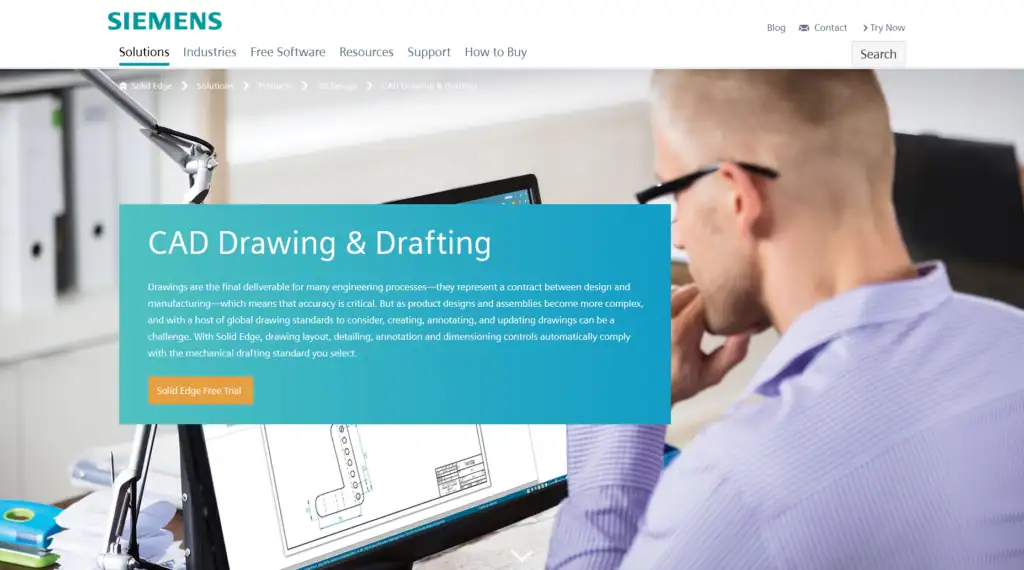
Tied for third in popularity, Siemens’ Solid Edge offers synchronous technology for hybrid modeling without history trees. It includes reverse engineering and cloud collaboration via Teamcenter.
Rolls-Royce and Procter & Gamble favor it for cost-effective PLM. 2025 brings AI sketching tools. At $2,550 annually, it’s value-packed, with free community editions for students.
9. Siemens NX
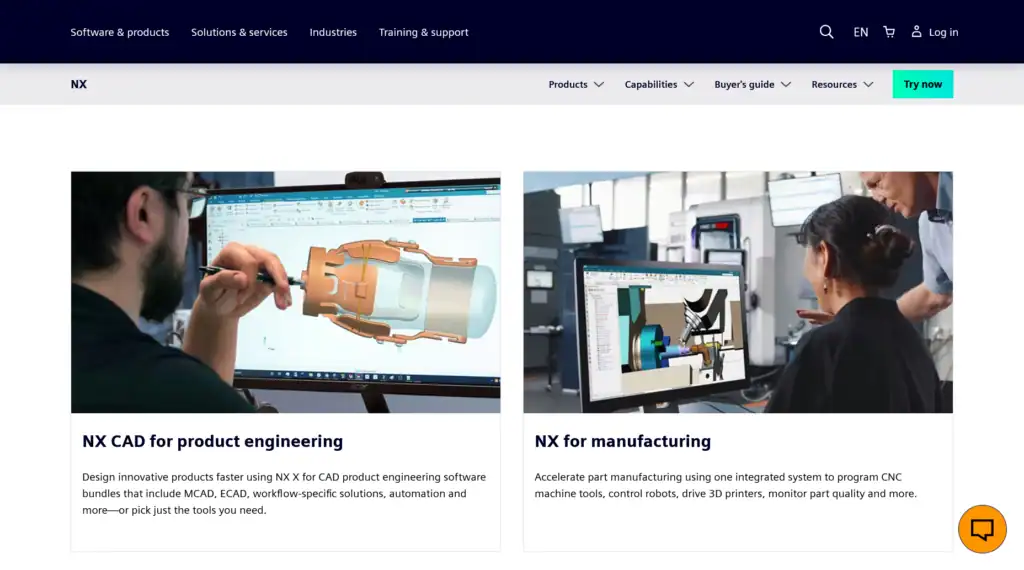
Siemens NX powers advanced simulation and digital twins, popular in automotive and electronics. Its convergent modeling blends facets and solids seamlessly.
Volkswagen and Samsung integrate NX for full-lifecycle management. 2025 enhancements include generative AI for assemblies. Enterprise pricing varies, but scalability is key. It’s demanding on resources but delivers unparalleled integration.
10. Revit (Autodesk)
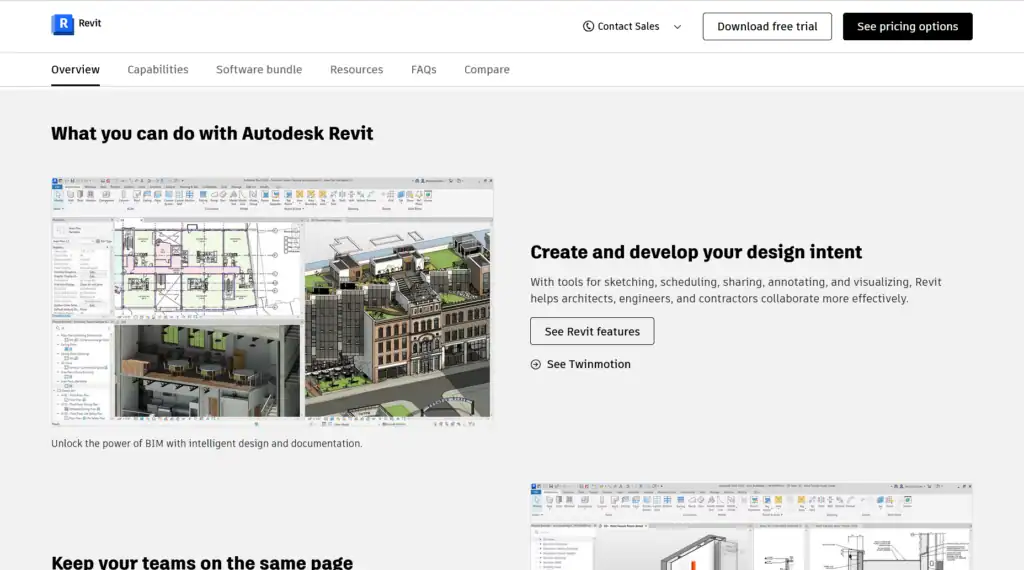
Revit has solidified its position as the leading BIM (Building Information Modeling) software, ranking third in adoption among architecture, engineering, and construction (AEC) firms globally.
Unlike traditional CAD, Revit operates on a parametric database, enabling real-time updates across all views, schedules, and drawings. This intelligent modeling approach supports multidisciplinary coordination and clash detection, reducing costly on-site errors by up to 40%.
Global giants like Skanska, Gensler, and Arup rely on Revit for large-scale projects such as stadiums, hospitals, and skyscrapers. The 2025 release introduces AI-powered space planning, automated code compliance checks, and enhanced cloud rendering via Autodesk Construction Cloud.
Annual subscription costs $2,775, with seamless integration into the Autodesk ecosystem. While its BIM-centric workflow demands structured processes, its ability to generate construction documentation automatically makes it indispensable in modern AEC workflows.
11. Onshape (PTC)
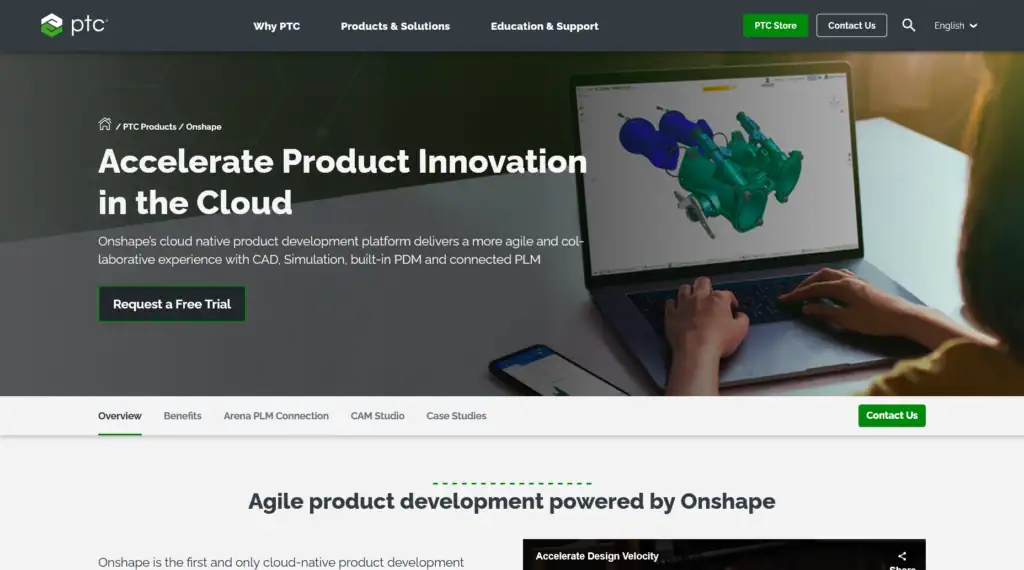
Rounding out the top 10, Onshape’s SaaS model enables real-time multi-user editing. Branching like Git for CAD prevents version conflicts.
SpaceX and smaller innovators use it for agile development. 2025 adds advanced branching analytics. Free for public docs, pro at $2,500/year. No installation hassles, but internet dependency is a con.
12. MicroStation (Bentley Systems)
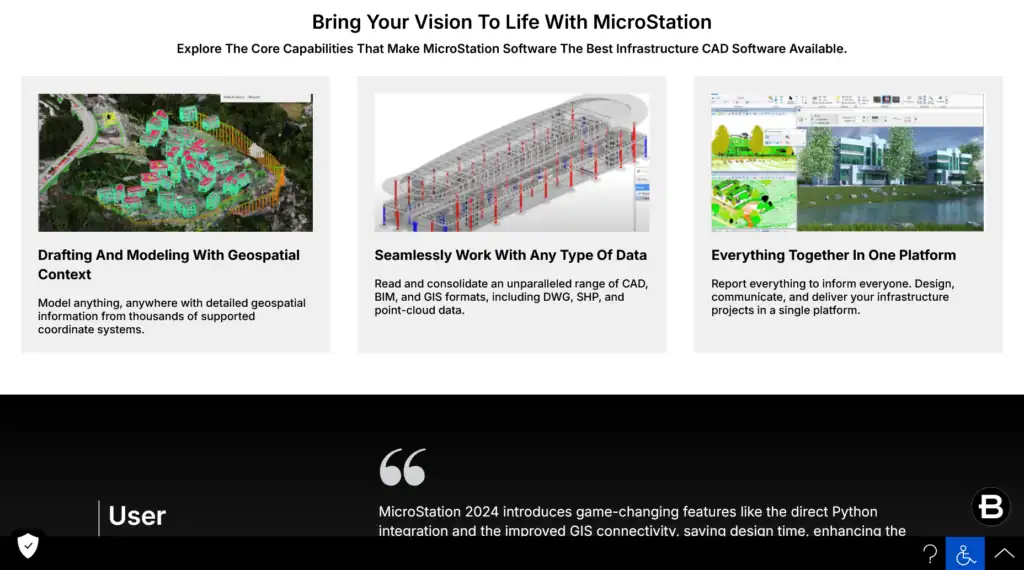
MicroStation rounds out the top 12 as a powerhouse in infrastructure and civil engineering, widely adopted by government agencies and large engineering firms. Known for its robust 2D/3D drafting, geospatial integration, and DGN file format, it excels in managing massive datasets for roads, bridges, rail systems, and utilities.
Organizations like the U.S. Department of Transportation, Network Rail, and AECOM use MicroStation for its unmatched precision in large-scale projects and interoperability with GIS platforms. The 2025 update introduces AI-assisted alignment optimization and real-time collaboration via ProjectWise 365.
Pricing is enterprise-based (typically $3,000+ per seat annually), with strong support for hybrid cloud workflows. Though its interface feels dated to some, its reliability in mission-critical infrastructure design keeps it a trusted standard worldwide.
Choosing the Right CAD for Your Company
Selecting from these top CAD softwares depends on industry, team size, and budget. AutoCAD and SolidWorks dominate broad applications, while specialized tools like CATIA excel in niches.
As AI and cloud tech evolve, expect even tighter integrations potentially slashing design times by 40% by 2030.
Free newsletter
Get the Work Insiders weekly
One email a week: the recruiting and HR tech news that mattered, the tools we just added to the directory, and one practical guide. No spam, and you can unsubscribe in one click.