

In today’s digital landscape, where billions of searches happen every day on platforms like Google, Bing, and even social media sites, visibility is everything. Imagine having a stunning website packed with valuable content, but no one can find it.
That’s where Search Engine Optimization (SEO) comes in. SEO is the art and science of making your website more appealing to search engines, so it ranks higher in search results and attracts organic traffic visitors who find you naturally, without paid ads.
As of 2026, SEO has evolved dramatically with the rise of AI-driven search, voice queries, and user-centric algorithms. According to industry reports, organic search drives over 50% of website traffic for most businesses, making SEO a cornerstone of digital marketing. But what exactly is SEO, and how can you leverage it?
This guide breaks it down, from the basics to advanced strategies, and answers the most common questions to help you master SEO like a pro.
Understanding the Basics of SEO
At its core, Search Engine Optimization (SEO) is the process of improving the quality and quantity of website traffic from search engines. It involves optimizing your site so that search engines like Google can understand, index, and rank your content effectively. Unlike paid advertising, SEO focuses on “free” or organic results, where your site appears based on relevance and authority rather than budget.
SEO isn’t just about stuffing keywords into your pages it’s a holistic approach. It combines technical tweaks, content creation, and off-site promotion to ensure your site meets user needs while satisfying search engine algorithms. For instance, Google’s algorithms evaluate over 200 factors, including content quality, site speed, mobile-friendliness, and backlinks, to determine rankings.
Why does this matter? In 2025, with AI tools like Google’s AI Overviews and alternatives like ChatGPT gaining traction, SEO is shifting toward “answer engines” that prioritize direct, helpful responses. Businesses ignoring SEO risk being buried in search results, losing out on potential customers who start 68% of their online experiences with a search engine.
The SEO process typically follows a structured flow: starting with keyword research to identify what users are searching for, followed by on-page optimizations, building authority through links, and ongoing monitoring. This ensures your site not only ranks but also converts visitors into loyal customers.
How Search Engines Work: The Foundation of SEO
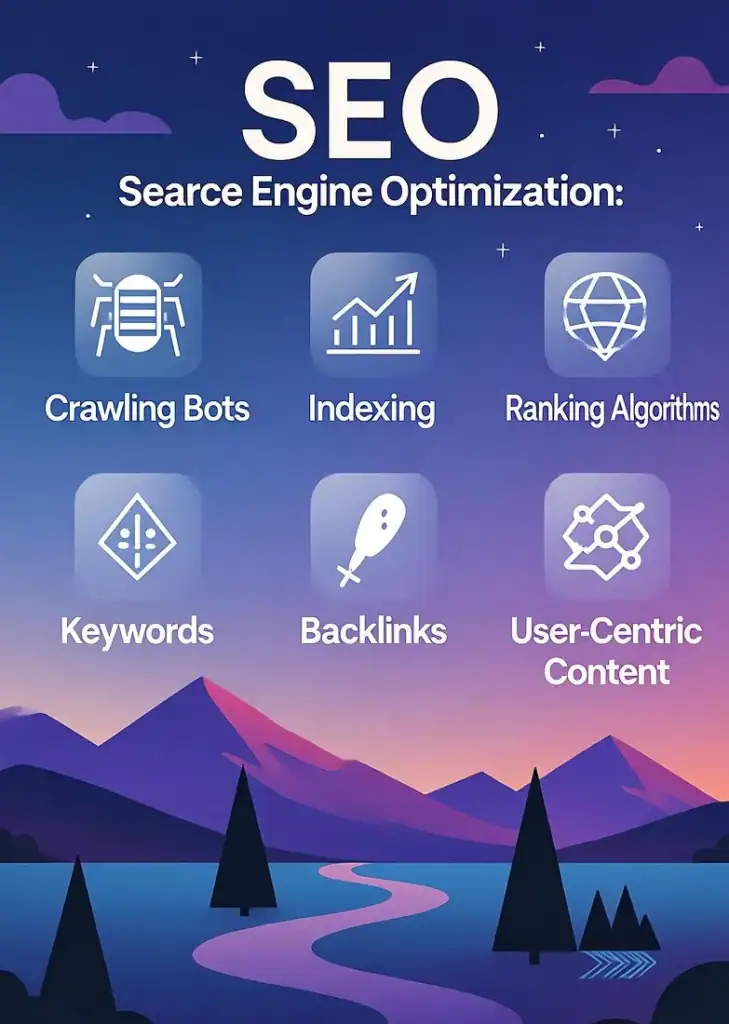
To grasp SEO, you need to understand how search engines operate. Search engines like Google use three main stages: crawling, indexing, and ranking.
- Crawling: Search engine bots (like Googlebot) discover new and updated pages by following links and sitemaps. If your site has poor navigation or blocks crawlers (via robots.txt), it won’t be found.
- Indexing: Once crawled, pages are analyzed and stored in a massive database. Factors like content uniqueness, meta tags, and structured data help engines categorize your site.
- Ranking: When a user searches, algorithms rank results based on relevance, quality, and user signals. Google’s E-E-A-T (Experience, Expertise, Authoritativeness, Trustworthiness) plays a big role here, rewarding content from credible sources.
In 2025, AI is transforming this. Features like AI Overviews summarize results, so SEO now includes optimizing for zero-click searches where users get answers without visiting your site. Mobile-first indexing means your site must be responsive, and Core Web Vitals (measuring load speed, interactivity, and visual stability) are crucial for rankings.
Types of SEO: On-Page, Off-Page, and Technical
SEO isn’t one-size-fits-all; it’s divided into categories to target different aspects of your online presence.
On-Page SEO
This focuses on elements within your control on the website itself. Key components include:
- Keyword Optimization: Research and integrate relevant keywords naturally into titles, headers, and content. Tools like Google Keyword Planner help identify search volume and competition.
- Content Quality: Create helpful, original content that answers user queries. Aim for depth long form articles like this one perform well.
- Meta Elements: Craft compelling title tags (50-60 characters) and meta descriptions (150-160 characters) to boost click-through rates.
- Images and Media: Use alt text for accessibility and SEO, compressing files for faster loading.
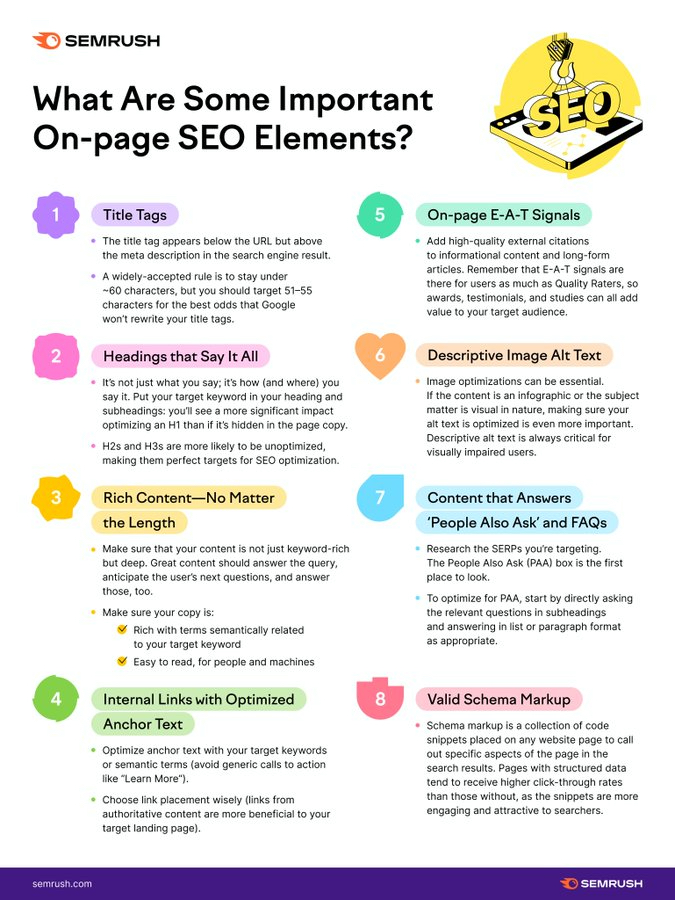
On-page also covers user experience (UX), like easy navigation and internal linking, which keeps visitors engaged and signals value to engines.
Off-Page SEO
This builds your site’s authority externally. The star here is backlinks links from other reputable sites pointing to yours. Quality trumps quantity; a link from a high authority site like Forbes is gold.
Other tactics include social media promotion, guest blogging, and PR to earn mentions. In 2025, “search everywhere optimization” extends to platforms like YouTube and TikTok, where 51% of Gen Z prefers searching.
Technical SEO
The backbone of SEO, this ensures your site is crawlable and performant. Best practices:
- Site Speed: Optimize images, use caching, and choose fast hosting.
- Mobile-Friendliness: With over 60% of searches on mobile, responsive design is non-negotiable.
- Structured Data: Add schema markup for rich snippets (e.g., star ratings in results).
- Security: Use HTTPS to build trust.
Tools like Google Search Console help diagnose issues, such as crawl errors or mobile usability problems.
Specialized types include Local SEO (for businesses targeting regions via Google Business Profile), Ecommerce SEO (optimizing product pages), and International SEO (handling multilingual sites with hreflang tags).
Key Strategies for Effective SEO in 2025
To succeed, blend these types with data-driven strategies. Start with keyword research: Use tools to find terms with high intent but low competition. Then, create content clusters hub pages linking to related articles to build topical authority.
Focus on search intent: Is the query informational (e.g., “what is SEO”), navigational (brand searches), commercial (researching products), or transactional (ready to buy)? Match your content accordingly.
AI-generated content is mainstream, but human oversight is key engines penalize low-quality AI spam. Emphasize first-hand experience and user-centric SEO for better rankings.
Monitor performance with analytics: Track metrics like organic traffic, bounce rate, and conversions. Adjust based on insights, and stay updated with algorithm changes via resources like Search Engine Journal.
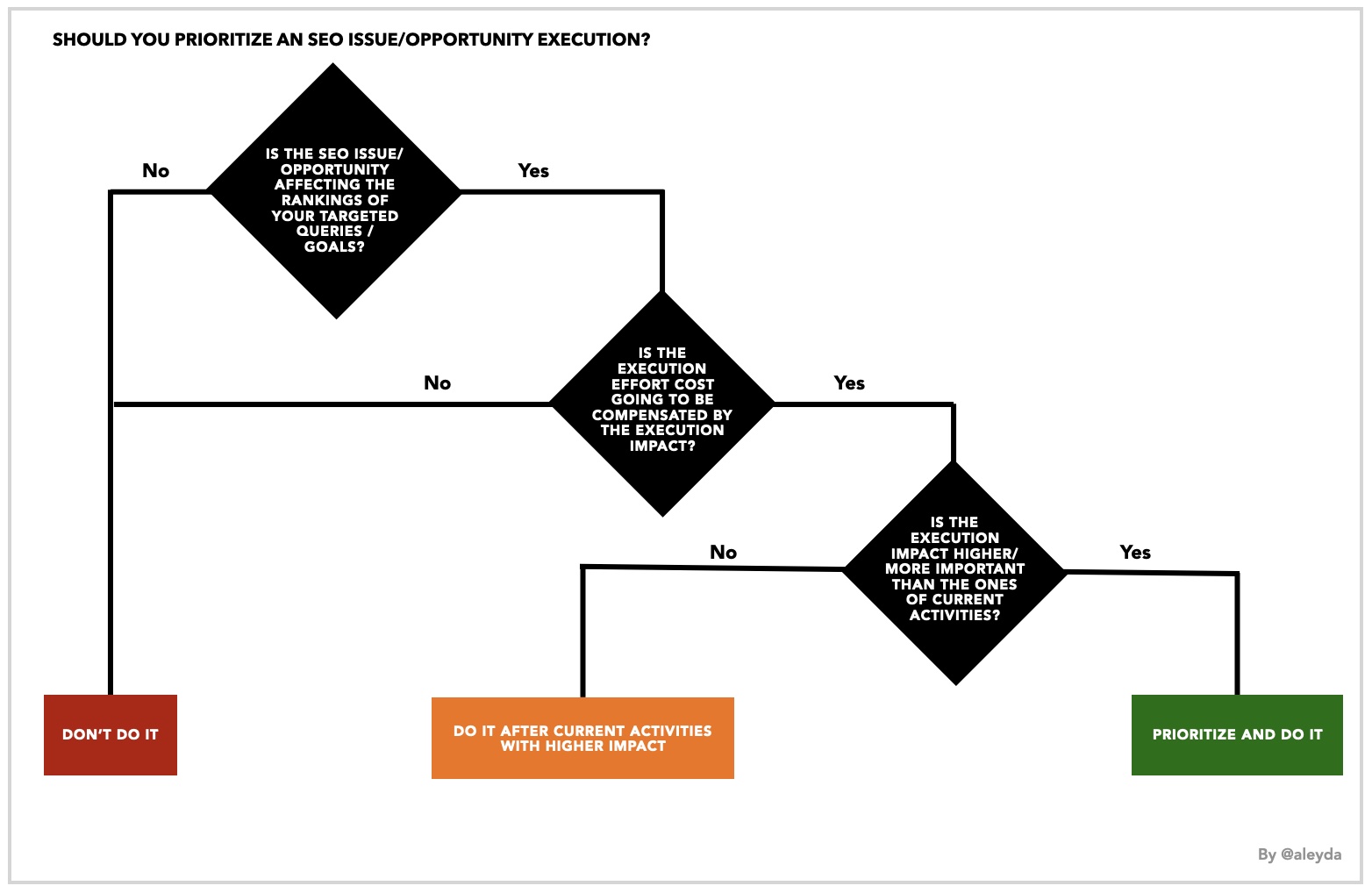
Image source aleydasolis.com
A flowchart for prioritizing SEO tasks, useful for decision-making in optimization efforts.
Common SEO Questions Answered
Here, we tackle the most frequently asked questions about SEO, based on expert insights and current trends.
What is the Difference Between SEO and SEM?
SEO is part of Search Engine Marketing (SEM), which includes both organic (SEO) and paid efforts like Pay-Per-Click (PPC) ads. SEO is long-term and cost-free in terms of clicks, while PPC offers immediate visibility but charges per click. They complement each other—use PPC for quick wins and SEO for sustained growth.
Why is SEO Important for My Business?
SEO drives targeted traffic, boosts credibility, and provides a high ROI. Unlike ads, organic rankings build over time, leading to compounding benefits. In 2025, with AI shifting search, SEO ensures your brand appears in summaries and voice results, capturing users early in their journey.
How Long Does SEO Take to Work?
Results vary, but expect 3-6 months for noticeable improvements, and 6-12 months for significant rankings. Factors like competition, site age, and content quality influence timelines. Patience is key SEO is a marathon, not a sprint.
Is SEO Free?
Technically, yes organic rankings don’t cost per click. However, it requires investment in time, tools, or experts. Free tools like Google Analytics exist, but premium ones accelerate progress.
What Are the Best SEO Tools?
Essential tools include:
- Google Search Console: For monitoring indexing and performance.
- Ahrefs or SEMrush: For keyword research and backlink analysis.
- Moz: For on-page audits.
Others like Screaming Frog for crawls and Surfer for content optimization are invaluable.
How Do I Improve My Website’s SEO?
Start with an audit: Fix technical issues, optimize content, and build backlinks. Prioritize mobile optimization, fast loading, and high-quality content. Use Google’s guidelines to avoid penalties.
Does Google Penalize Websites for SEO?
No, but black-hat tactics like keyword stuffing or buying links can lead to penalties. Stick to white-hat, user-focused SEO.
What is the Future of SEO?
In 2026 and beyond, expect more AI integration, focus on user intent, and diversification beyond Google (e.g., TikTok, Amazon). Community search and sales optimization will rise, with E-E-A-T remaining central.
Conclusion: Mastering SEO for Long-Term Success
Search Engine Optimization (SEO) is more than a buzzword it’s a vital strategy for thriving online. By understanding its basics, implementing best practices across on-page, off-page, and technical elements, and staying ahead of trends like AI, you can drive meaningful traffic and growth. Remember, SEO rewards consistency and quality; start small, measure results, and scale.
Whether you’re a beginner or seasoned marketer, resources like Moz’s Beginner’s Guide or Google’s Search Central are excellent starting points. Dive in, experiment, and watch your online presence soar. With the right approach, SEO can transform your digital footprint in 2026 and beyond.
Free newsletter
Get the Work Insiders weekly
One email a week: the recruiting and HR tech news that mattered, the tools we just added to the directory, and one practical guide. No spam, and you can unsubscribe in one click.